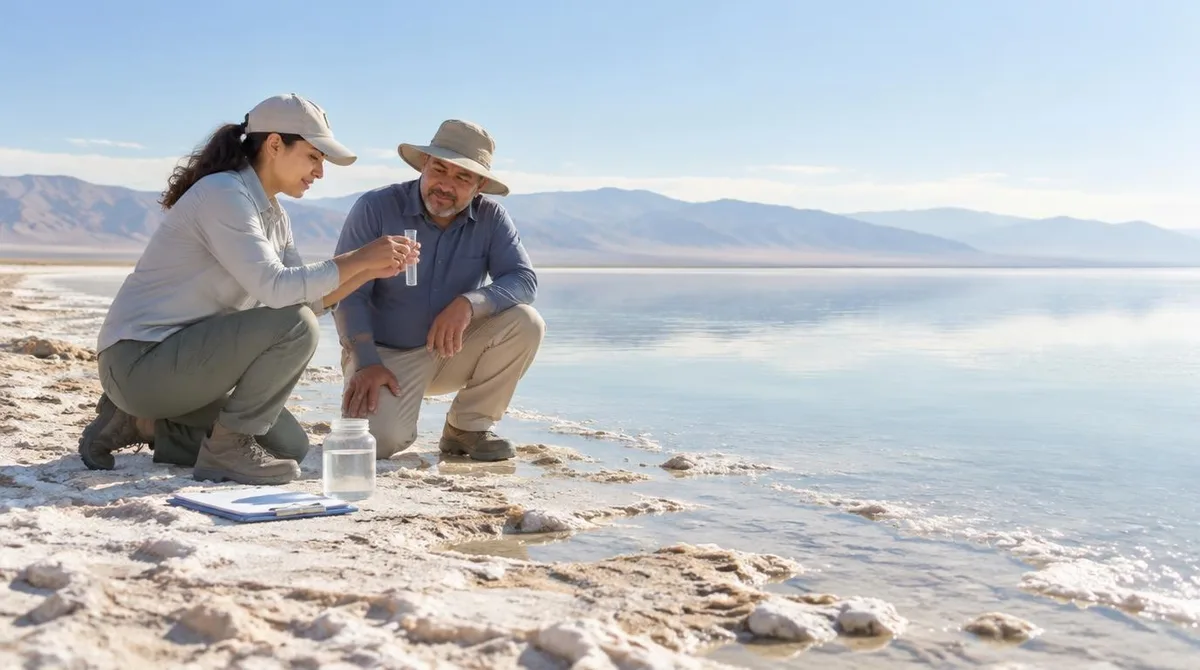
Can a four-month local program actually turn residents into working conservationists? Based on what's documented, the honest answer is: for some people, yes — and the evidence is specific enough to take seriously. According to National Audubon Society, the Salton Sea Leadership Program puts a cohort of 10 local residents through four months of learning each year, taught by researchers, engineers, and environmental organizations in the Coachella and Imperial Valleys.
The program's own published account names three alumni and traces what they did afterward. That's a stronger record than most community programs offer. It is also a small sample, drawn from a story the program itself tells. Both things are true, and a careful reader should hold them together.
This piece is a second look at that story — what the record supports, where it goes quiet, and how much weight a single sourced account can carry. For readers following how local programs shape who gets access to environmental work, this sits squarely in our community news coverage. Readers following this should also see Synastry, Or How Chart Comparison Is Supposed To Work.
What did the alumni actually do after graduating?
The documented outcomes are concrete, not vague. Kevin Manajerro, a 2026 alum, is earning college credit through the College of the Desert's Work Experience Program with UCR's Center for Conservation Biology and now works as a lab assistant in Dr. Lynn Sweet's lab, assisting with wildlife surveys in places like the Coachella Valley Wildlife Refuge. He told the program's writer he met Dr. Sweet through his job at REI, but had first met researcher Melanie Davis through the Salton Sea Leadership Program.
Amanda Bautista, a 2025 alum, created the first Salton Sea bird guide as her capstone project, then went on to the Pacific Northwest Research Station, where she ran woodpecker telemetry surveys and helped trap small mammals, including flying squirrels. Through the program's continued alumni engagement, she was hired as a seasonal survey technician on the University of Idaho's Yuma Ridgway's Rail research project at the Sonny Bono Salton Sea National Wildlife Refuge, recording measurements and collecting samples to analyze selenium buildup in the rails. She now works as an environmental biologist at a consulting firm, surveying for reptiles, birds, and small mammals to confirm construction sites meet environmental requirements.
Ciara Taylor, also a 2025 alum, took a different path. She runs PS Take a Hike with her "partner in nature," Judy Gill — a hiking club she says is "growing into a larger community, to get outside and get other people to hit the trails." She called the program "a stepping stone to access the community and learn about things that are completely out of my wheelhouse."
Why does the program's own framing deserve scrutiny?
The account comes from Audubon, which runs the program. That doesn't make it false — the details are checkable in shape, and the piece includes field scenes rather than just praise. The writer describes a 90-degree morning at 7 a.m., six survey transects, and the first Flat-tailed Horned Lizard documented at that site since Kevin began participating. Specifics like that read as observation, not brochure copy.
But it is still one source evaluating its own program. There are no numbers here on how many of the roughly 10 graduates per year land conservation jobs, no comparison group, and no follow-up on alumni who didn't appear in the story. Three success stories from two cohorts is evidence that pathways exist. It is not evidence about rates.
The program's structure does address one common criticism of short courses: it isn't, as the piece puts it, "just a lecture series." It's described as an educational internship, and it keeps alumni engaged through community outings and job search assistance — which is how Amanda's rail-survey job came about. Continued engagement is a mechanism, and a plausible one.
Who is the program actually built for?
Here's the part of the record that matters most for readers asking whether this kind of work is open to them. Melanie Davis, who presents her work with the endemic Orocopia Sage (Salvia greata), encourages participants to pursue conservation work even if their educational backgrounds aren't in science. Ciara, like many others in the program, doesn't come from a traditional science background — the kind many people assume is required.
That challenges a real barrier. Conservation careers often look gated by degrees, and this program's documented alumni include people who entered without one. The trade-off: the piece doesn't say how many participants share that background, or what support looks like for those who struggle. The record shows the door opens. It doesn't show how wide. We covered a connected angle in What Mercury Retrograde Actually Looks Like From Space.
There's also a community dimension the alumni themselves name. Amanda said the program felt like "a family" and "a safe place to be a part of," adding, "I can count on my SSLP people to make me feel better being in the same field and being a woman in the field." Belonging isn't a job placement, but for anyone weighing whether to enter a field where they might be the only one like themselves in the room, it counts. Stories like hers are why we keep a stories section focused on documented community voices.
What's at stake at the Salton Sea itself?
The setting is not incidental. The Salton Sea is a designated Important Bird Area and a stopover for more than 300 bird species along the Pacific Flyway, per the same account. Amanda, comparing a rail project in Arizona with her home ground, put it plainly: "In Arizona, the bird sounds were really quiet, I can hear [the Rails] splashing in the water. At the Salton Sea it's so loud with all the birds and biodiversity."
That abundance is why local residents doing the survey work matters. Monitoring a place that busy takes people on the ground, and the program's argument is that the people best positioned to do it live nearby. The broader context of who gets to shape environmental decisions belongs in any serious society discussion, and this program is a small, testable instance of that question.
So is it a pathway or a good story?
It's a pathway with a good story attached — and the story is the weaker of the two claims only because it's the only evidence we have. The documented facts support this much: a small annual cohort, a structure that goes beyond lectures, continued alumni engagement that produced at least one documented hire, and three alumni now doing fieldwork, research, or community organizing connected to the program. The 2027 program is described as "just around the corner," so the next cohort's outcomes will add to the record.
What remains unknown is the base rate — how many participants, over time, get the kind of outcomes Kevin, Amanda, and Ciara did. Until someone publishes that, the fair reading is modest: the program has opened real doors for real named people. Whether it opens them reliably is a question the next few cohorts can answer, if anyone keeps count.