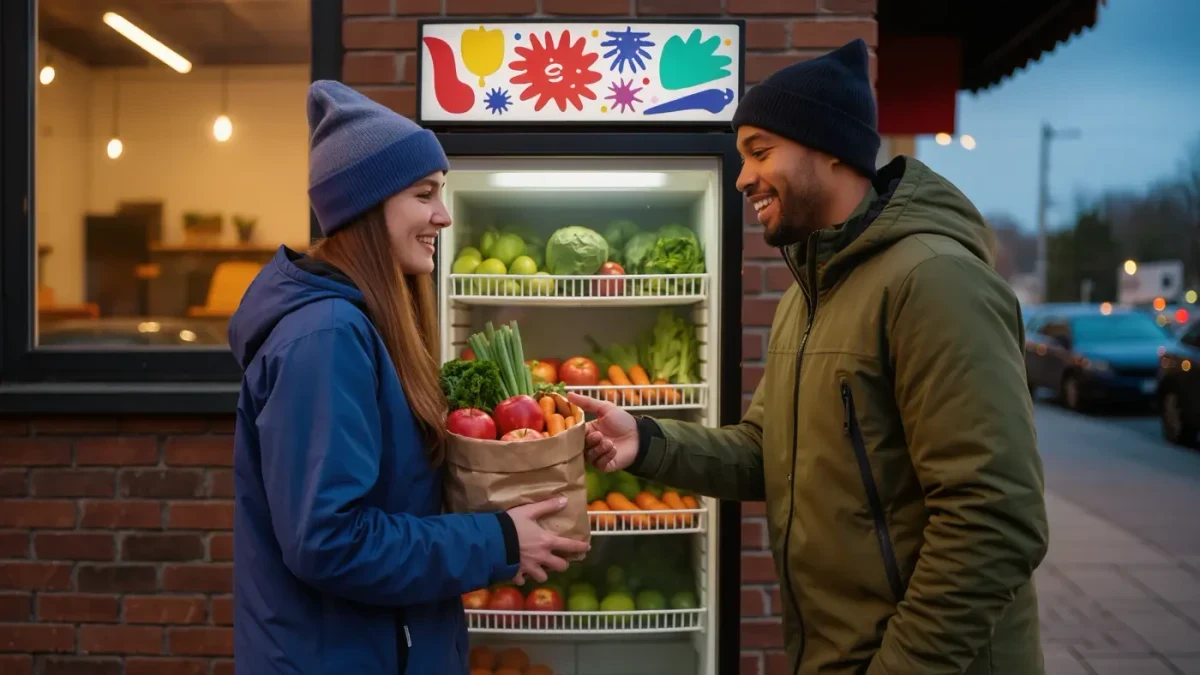
On a quiet block, a refrigerator sits outside a church, a barbershop, or a community garden. There is no lock, no clerk, and no paperwork. There is only a hand-lettered sign that reads the same everywhere: take what you need, leave what you can. These are community fridges, and across the United States they have become one of the most durable expressions of mutual aid to emerge from the pandemic years.
How does a community fridge actually work?
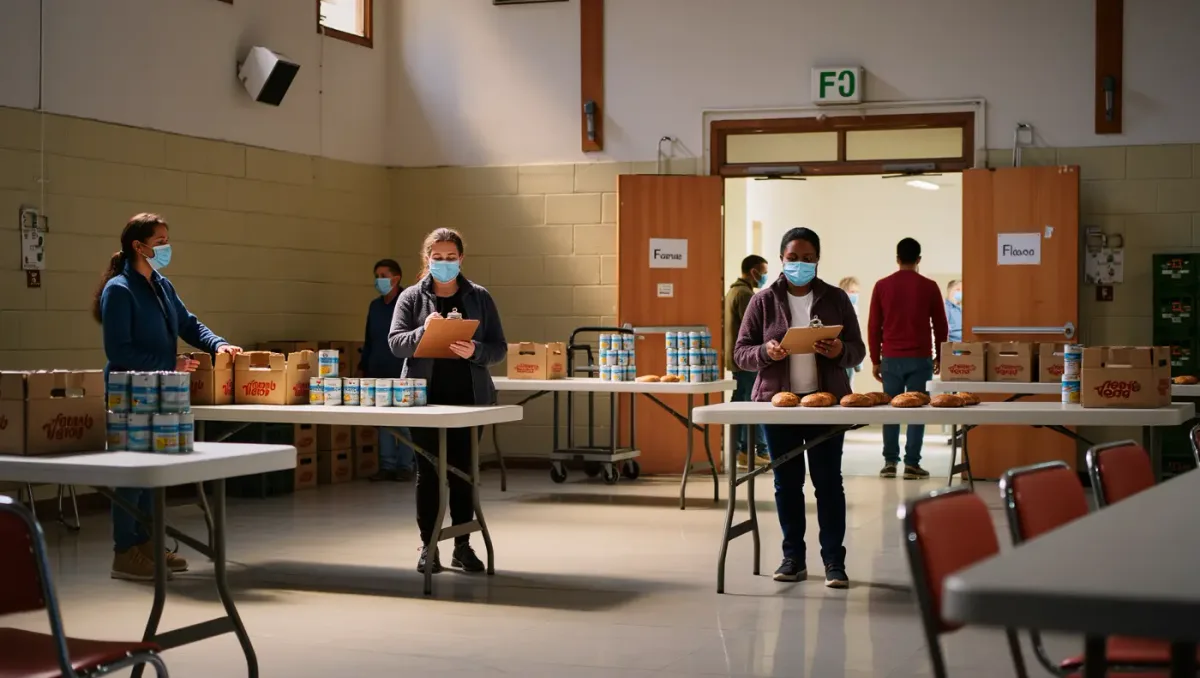
The model is deliberately simple. A volunteer group, often just a handful of neighbors, places a working refrigerator somewhere with permission from the host business or organization and access to an outdoor power outlet. Volunteers plug it in, clean it on a rotating schedule, and keep it stocked. Anyone can open the door. There is no means test, no ID check, and no limit on what a person may take. Food comes from a mix of sources: home cooks dropping off a casserole, community gardens unloading a summer surplus, bakeries and restaurants handing over the day's unsold bread, food rescuers ferrying produce that a grocery store pulled from the shelves too early.
Most networks post simple ground rules, written by the volunteers themselves. Food should be labeled and dated. Meals should be sealed. Raw meat is usually discouraged because not every fridge site has freezer capacity. Beyond that, trust does the governing. Organizers consistently report that fridges are respected, not emptied by any one person, and that the person who took a bag of groceries on Tuesday is often the person dropping off apples on Saturday.
Where did the movement come from?
The street-fridge wave in the United States is usually dated to February 2020, when the first boxes appeared on New York City sidewalks. The growth that followed was startling: by December of that first pandemic year, the Museum of the City of New York counted more than 60 community fridges operating across the five boroughs. The idea traveled fast because it answered two crises at once — lost incomes and closed kitchens — with an object almost everyone understands how to use.
The fridges outlived the emergency. In Philadelphia, what began as scattered pandemic-era projects has grown into a network of at least 40 fridges that Next City has described as a more permanent fixture of the city's food system. In Detroit, the Detroit Community Fridge collective has kept multiple fridges running citywide on volunteer power alone. Smaller cities, from Worcester, Massachusetts, to towns in the Hudson Valley, have launched their own. The pattern repeats: a fridge that starts as an emergency response becomes a neighborhood institution.
Why do fridges matter when food banks exist?
Food banks and pantries save lives, and nothing here replaces them. But pantries typically run on schedules, require visits during set hours, and sometimes ask for documentation. A fridge is open at 2 a.m. It asks no questions. For people who work shifts that collide with pantry hours, who lack transportation, or who feel stigma walking through a door labeled as assistance, the anonymity of a sidewalk fridge matters.
There is also a dignity argument that organizers raise often. A community fridge is not charity flowing downhill from an institution to a client. It is neighbors feeding neighbors in both directions. The same person can be a donor at noon and a recipient at midnight without anyone recording the difference. Mutual aid, as the volunteers describe it, is a relationship, not a transaction.
What keeps a fridge network alive?
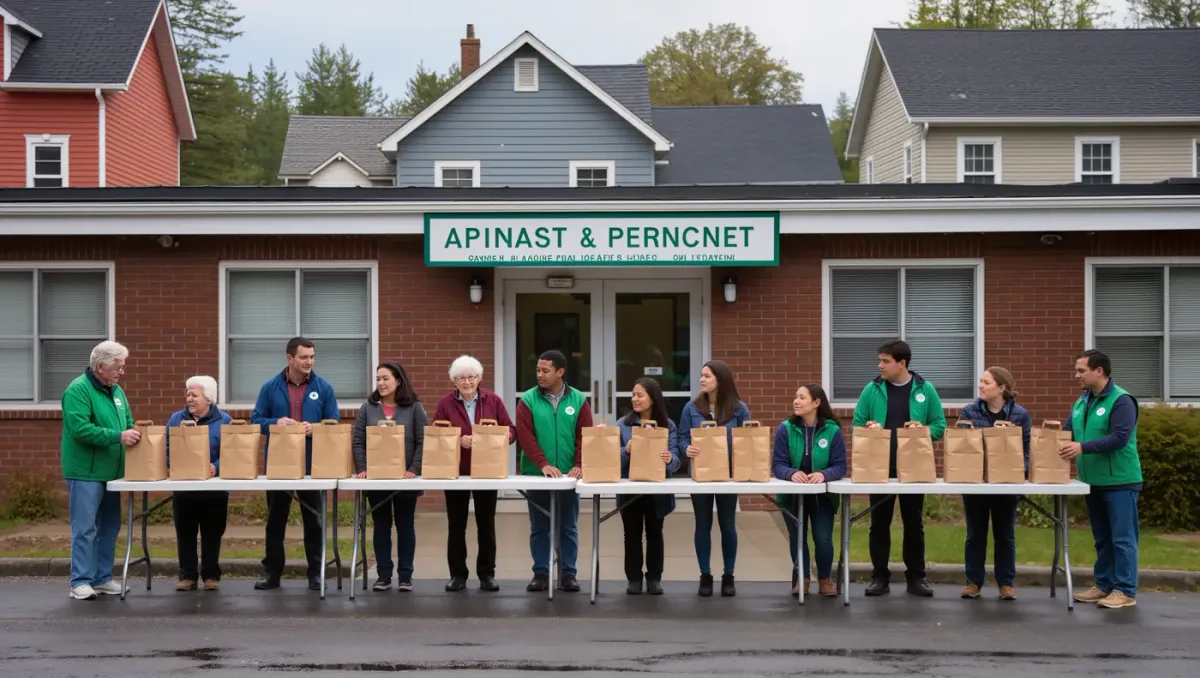
Electricity, mostly, and then people. Organizers say the real work is not dramatic. It is the volunteer who wipes shelves every week, the host business that quietly absorbs the power bill, the gardener who plants an extra row of tomatoes in spring with the fridge in mind. Money is raised in small amounts — online fundraisers, bake sales, collections at local shows — and spent on repairs, because compressors die and winter is hard on outdoor appliances.
The networks have also grown harder than their improvised beginnings suggest. Many now coordinate surplus pickups from grocery partners, run cleaning rotations, map their fridges publicly, and share guidance with new groups in other cities asking how to start. What began as a refrigerator on a sidewalk has become a curriculum.
How can you start or support one?
If your neighborhood has a fridge, the fastest way to help is also the smallest: bring food that you would gladly eat yourself, sealed and labeled. If you want to do more, most networks publish volunteer sign-ups for stocking and cleaning runs. And if your neighborhood has no fridge yet, organizers' advice is consistent — start with a host, not with an appliance. Find a business, congregation, or garden willing to offer outlets, shade, and eyes on the street, and the rest of the network's playbook is short enough to fit on a flyer.
What does this change for the community?
Community fridges put food within a short walk of the people who need it, at every hour, with no gatekeeping. They cut food waste by giving surplus a same-day destination, they keep money circulating locally when grocers and bakers donate instead of dumping, and they give residents a concrete, low-barrier way to act on the hunger they see around them. In a time when nutrition benefits are tightening in many states, a refrigerator that belongs to nobody and everybody is a quiet form of infrastructure — one that a neighborhood can build for itself in a weekend and keep for years.