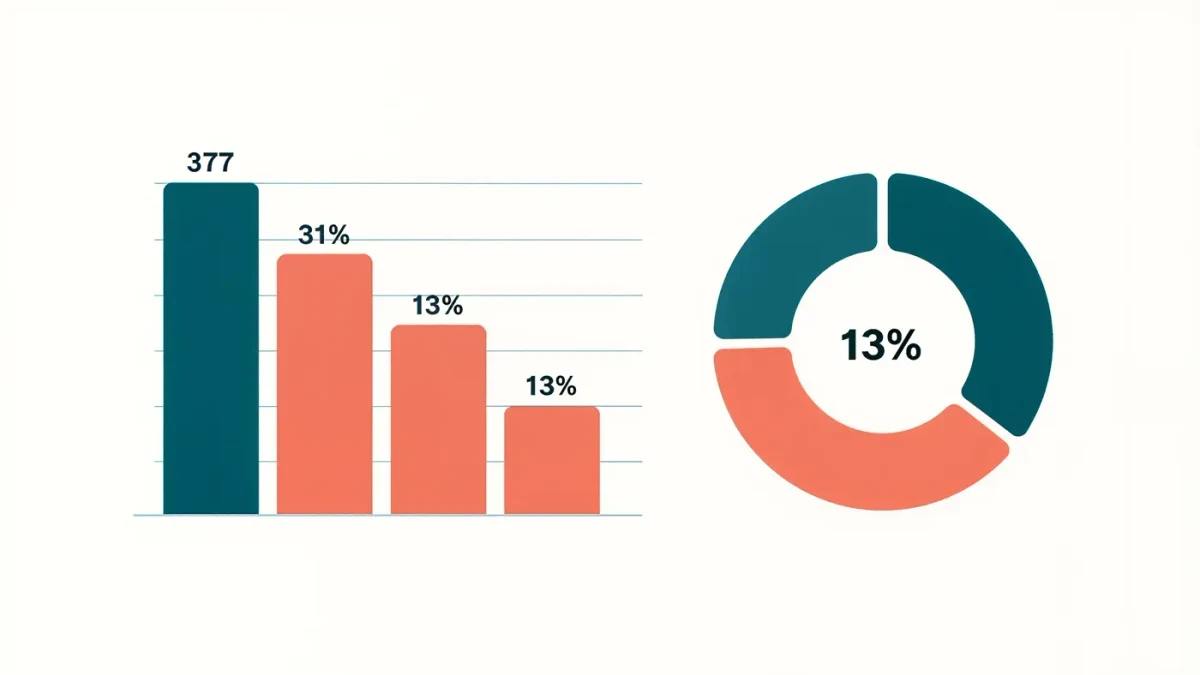
The Human Rights Campaign Foundation released its 2026 Corporate Equality Index on February 4, 2026, and the headline number is a steep one: participation by Fortune 500-ranked companies fell 65 percent, from 377 in the 2025 edition to 131, as first reported by CNBC the same day and followed by HR Brew's February 6 coverage of the accompanying State of the Workplace report. Roughly 1,450 businesses participated overall, close to flat year over year, which means the retreat was concentrated among the largest corporations.
What exactly dropped, and what did not?
The Corporate Equality Index scores employers on LGBTQ+ workplace policies: nondiscrimination language, partner benefits, transgender-inclusive healthcare coverage, and internal accountability. The 2026 edition still recorded 108 Fortune 500-ranked businesses with a verified score of 100, and a record 609 companies overall earned perfect scores, per HRC's published results. The Associated Press reported that major companies including Ford, Harley-Davidson, and Lowe's had publicly announced they would stop participating, part of the broader corporate pullback from DEI programs that began in 2024 and 2025. HRC's own survey research, released alongside the index, found that 39.1 percent of U.S. workers say their employers rolled back DEI practices.
Why do companies pull out of a voluntary survey?
Because participation is voluntary and the questionnaire requires documentation. A company that answers must submit evidence of its policies and benefits, and some corporations facing legal and political pressure over diversity programs concluded that documented participation carried more risk than absence. The practical consequence is asymmetry: when a large employer quietly exits, outside advocates, journalists, and job seekers lose their only standardized window into that company's benefits and nondiscrimination practices.
What does this change for LGBTQ+ workers?
The index's real function for individuals was comparability. A prospective employee could check whether an employer offered transgender-inclusive health coverage or domestic partner benefits without waiting for an interview to ask. With two-thirds of Fortune 500 participants gone, workers at or applying to non-participating companies have to gather that information directly, question by question, in benefits documents and employee handbooks. For workers at the 131 companies that stayed, the disclosure itself is now a signal, and HRC's data suggests the workplace climate question is live: over half of U.S. workers polled by the organization reported experiencing stigma or bias at work.
What is the context other coverage missed?
Most reporting framed the drop as a barometer of corporate politics. The under-covered angle is what happens to the data itself. The CEI is one of the few large-scale, verified datasets on LGBTQ+ workplace benefits in the U.S. private sector, and its Fortune 500 contraction lands in the same period when federal workforce demographic reporting is also under question. Two data layers thinning at once means researchers studying whether benefits access is improving or eroding will have less to work with, and policy debates will increasingly rest on anecdotes rather than measurement. That is a loss even for people who never consulted the index directly, because employers often benchmark quietly against it when deciding what benefits to offer.
Where can readers check the results themselves?
HRC publishes the full 2026 Corporate Equality Index, including scored companies and methodology, on its website, and the AP and CNBC reports summarize the participation shift for anyone who wants the short version.