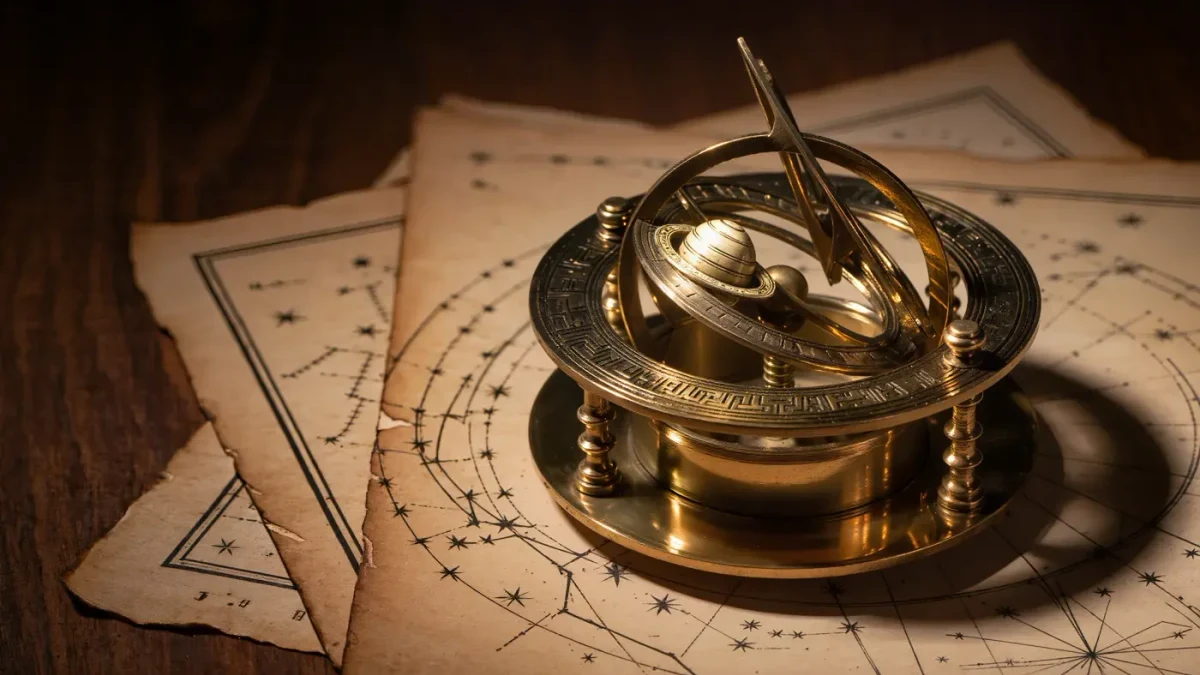
A Saturn return is the moment when the planet Saturn comes back to the exact zodiac position it held when you were born, which happens first at around age twenty-nine. Astrologers read it as a structural deadline: the scaffolding of young adulthood gets inspected, and whatever is flimsy tends to wobble. The astronomy is verifiable, since Saturn takes about 29.5 years to orbit the sun; everything the period is said to mean belongs to symbolic tradition.
Astrology is an entertainment tradition, not a science; Equality Weekender publishes it as lifestyle content, not prediction or advice.
What is Saturn supposed to represent?
In the tradition, Saturn is the taskmaster: boundaries, time, responsibility, consequence, and the slow compounding of effort into mastery. It is called the greater malefic in classical texts, which sounds grim but really means it rewards patiently and punishes shortcuts. Astrologers read Saturn as the planet of adulthood itself, the voice that asks whether the life you are building can bear weight. Unsurprisingly, the festival of Saturnalia aside, nobody in two thousand years of astrological writing has ever accused Saturn of being the fun one at the party.
Why does the first return land near age twenty-nine?
Because orbital mechanics are indifferent to biography. Saturn completes one circuit of the sun in roughly 29.5 years, so everyone's first Saturn return arrives between twenty-eight and thirty, with slight variation for retrogrades near their birth date. A second return comes near fifty-eight and a third, for the long-lived, near eighty-eight. Practitioners read each pass as a graduation: the themes Saturn touched in your natal chart return for examination, and the tradition says you meet them with whatever maturity you have accumulated since.
What kinds of things do astrologers say get audited?
The classical reading is that Saturn tests whatever it touches, and during a return it touches its own natal placement and house. Practitioners describe careers that reveal themselves as dead ends, relationships that formalize or fracture, moves, and the sudden arrival of adult obligations. The common thread is structure: things either become real or become visibly unsustainable. Astrologers like to say Saturn does not bring the crisis; it brings the invoice. The life you actually built, versus the one you narrated, gets reconciled.
Is the second return different?
In the tradition, yes. The return near fifty-eight is read as an accounting of legacy: what you built, whom it served, what the remaining decades are for. Practitioners describe it as gentler than the first but more clarifying, a season for pruning rather than constructing. Some people change course entirely; others finally claim a long-deferred ambition they had shelved for decades. As with all Saturn lore, the framework is only as useful as the honesty you bring to it.
How do people work with a Saturn return, in the spirit of the tradition?
- Start the boring, load-bearing things: the savings habit, the certification, the therapy, the apology, the skeleton of the project you keep deferring to next year.
- Let unsustainable structures fail small, rather than propping them up for another decade.
- Trade fantasy deadlines for real ones. Saturn's signature theme is time, and the return is read as time calling in its pledges.
- Expect progress to feel slow and unglamorous. Practitioners consider that sensation the signature of authentic Saturn work.
Should anyone actually fear it?
As prophecy, no; as a cultural ritual, it has genuine charm. Developmental psychologists describe the late twenties as a period of consolidation anyway, so the Saturn return works as a folk calendar for a transition that happens regardless of the sky. Plenty of people sail through their return with nothing worse than a promotion and a mortgage and a good night’s sleep. The tradition's own advice is the least mystical sentence in astrology: do the work, keep your promises, build to last. If a symbolic alarm clock at twenty-nine helps a reader take her scaffolding seriously, it has earned its entertainment value. If it becomes a source of dread, it has been misread, because Saturn's whole lesson, in the stories astrologers tell, is that fear shrinks exactly as responsibility is shouldered.