Earth Day arrives on Wednesday, April 22, 2026, carrying the theme "Our Power, Our Planet," EARTHDAY.ORG's frame highlighting community innovation and local problem-solving alongside the push for renewable energy. But a week before the date itself, the most visible part of the holiday is already underway on the ground: neighborhood cleanup sign-ups, as local groups register events with the Great Global Cleanup, the campaign EARTHDAY.ORG runs to rally waste and plastic-pollution removal worldwide.
What is the Great Global Cleanup?
The campaign, hosted at earthday.org, connects cleanup organizers and volunteers into one of the world's largest coordinated environmental action programs; the organization estimates the effort has mobilized more than 14 million participants globally. The mechanics are deliberately local. Any group — a block association, a scout troop, a watershed alliance — registers its event on the campaign page, and volunteers search by location to find a pickup site near them. EARTHDAY.ORG's listings have included hyperlocal efforts such as Philadelphia's "Block by Block" neighborhood cleanups, where residents split a street into segments and clear litter block by block.
Why do cleanups cluster around April 22?
Earth Day has been marked each April 22 since 1970, and the weeks around it function as an unofficial season of service for environmental groups. Parks departments and friends-of-the-park groups schedule their spring cleanups to ride the attention: winter's accumulated litter is out, soil is workable, and volunteer energy is highest. For 2026, the "Our Power, Our Planet" theme puts the emphasis on what communities can generate themselves — solar co-ops, school gardens, neighborhood composting — and a cleanup remains the lowest barrier to entry: gloves, bags, and an afternoon.
How do neighbors join or start one?
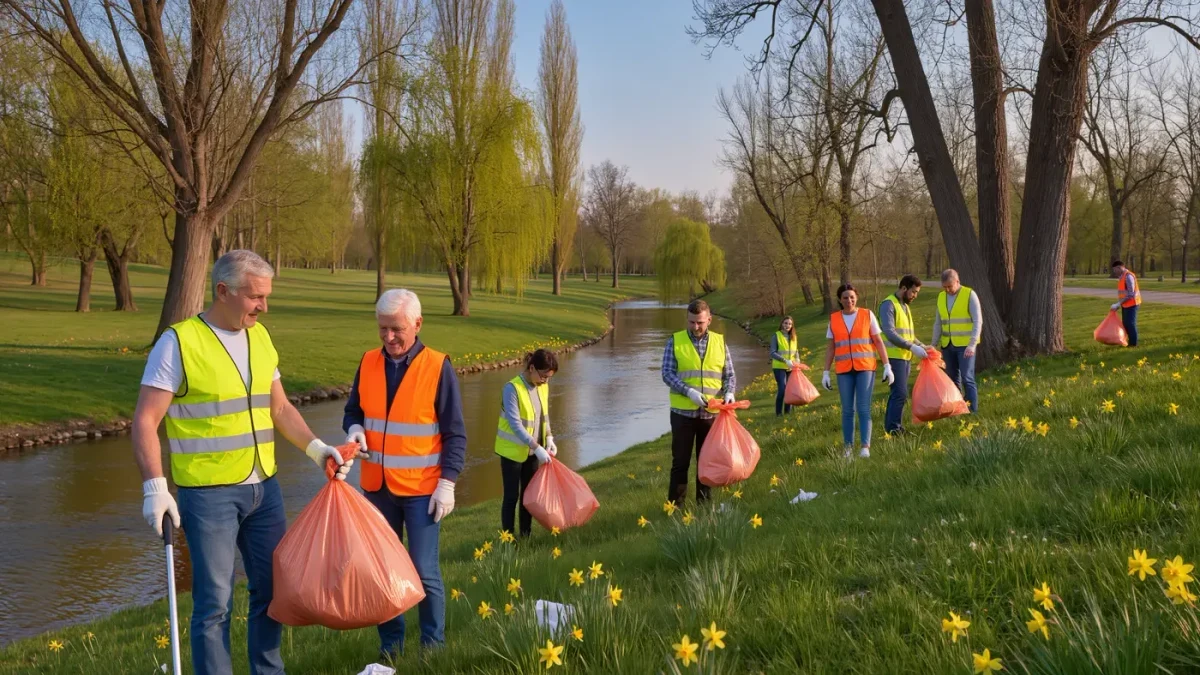
Organizers say the recipe has not changed. Pick a stretch — a park edge, a creek bank, a school lot — and get permission from the municipality or agency that owns it. Register the event so volunteers can find it. Source supplies: many public works departments lend grabbers, gloves, and bags to registered groups free. Sort what is collected, because a cleanup that pulls recyclables and trash apart multiplies its effect. And weigh or count what is hauled out; groups that report their totals feed the campaign's running tally, which in turn persuades city officials that litter hot spots deserve structural fixes — bins, enforcement, or storm drain screens.
What does this change for the community?
A registered cleanup does three things at once. It removes waste that would otherwise wash into storm drains and waterways. It creates a public, visible act of care that tends to depress future littering on the same stretch — a well-documented effect of maintained spaces. And it hands residents their first taste of environmental organizing, which is exactly the pipeline the "Our Power, Our Planet" theme is built on: people who pick up trash together in April show up to planning meetings in September. For a movement now more than five decades old, the neighborhood cleanup remains the front door.