The Air Carrier Access Act, passed by Congress in 1986, is the federal law that prohibits airlines from discriminating against passengers with disabilities, and it gives wheelchair users a specific set of enforceable rights: assistance through the airport, priority stowage for a folding wheelchair in the cabin, and — since stronger US Department of Transportation rules took effect — an airline obligation to return a damaged wheelchair repaired or replaced. The DOT enforced the law through thousands of disability-related complaints in recent years, which tells you both that the protections are real and that they are often tested.
This article is an explainer, not legal advice. EQUALITY WEEKENDER publishes information about the law so travelers can plan and self-advocate; for a specific dispute, the DOT's complaint process and a disability-rights attorney are the right venues.
Which airlines does the ACAA cover?
The law covers all flights to, from and within the United States, on both US carriers and foreign airlines. A flight from London to New York on a European carrier falls under the ACAA; a purely domestic flight within another country does not. This is broader than many travelers assume — the law follows the route, not the flag on the tail.
The DOT implements the ACAA through its Part 382 regulations, which set out the details: what assistance airlines must provide, what training staff need, what counts as a violation and what fines can follow. When advocates talk about wheelchair rights on planes, they are usually talking about Part 382.
What assistance must an airline provide at the airport?
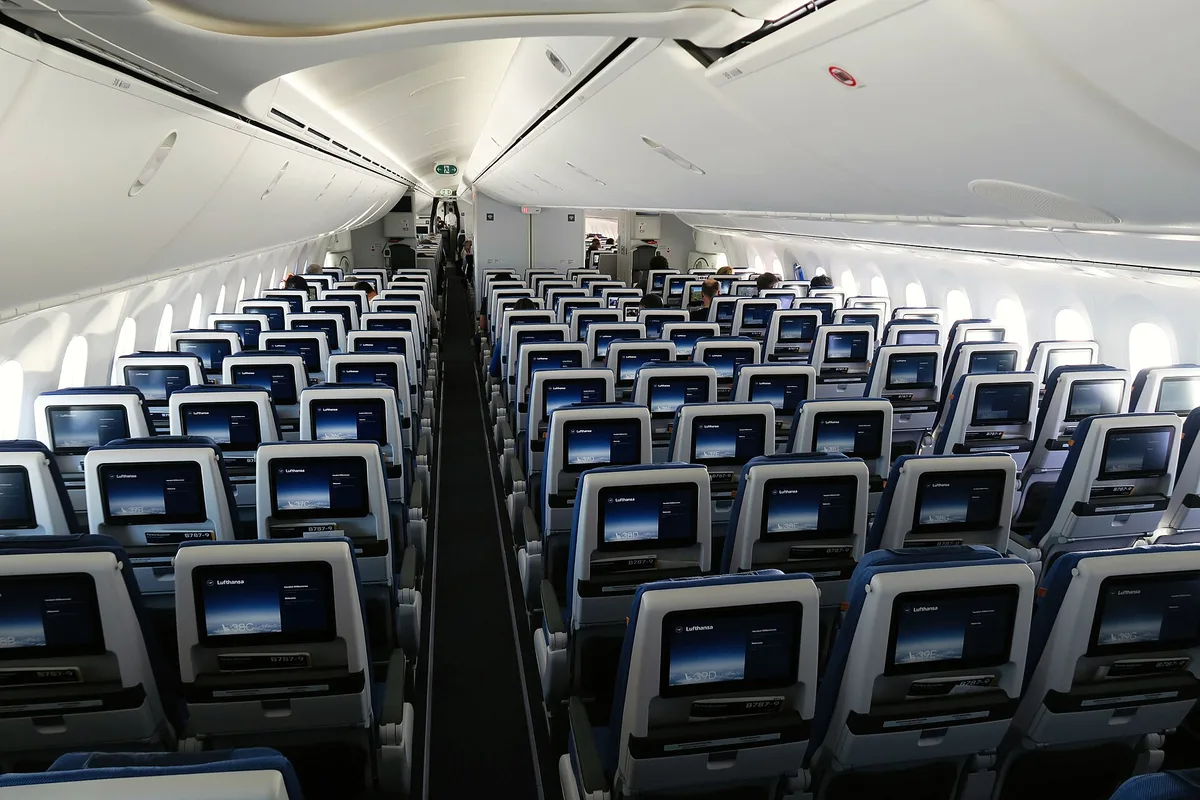
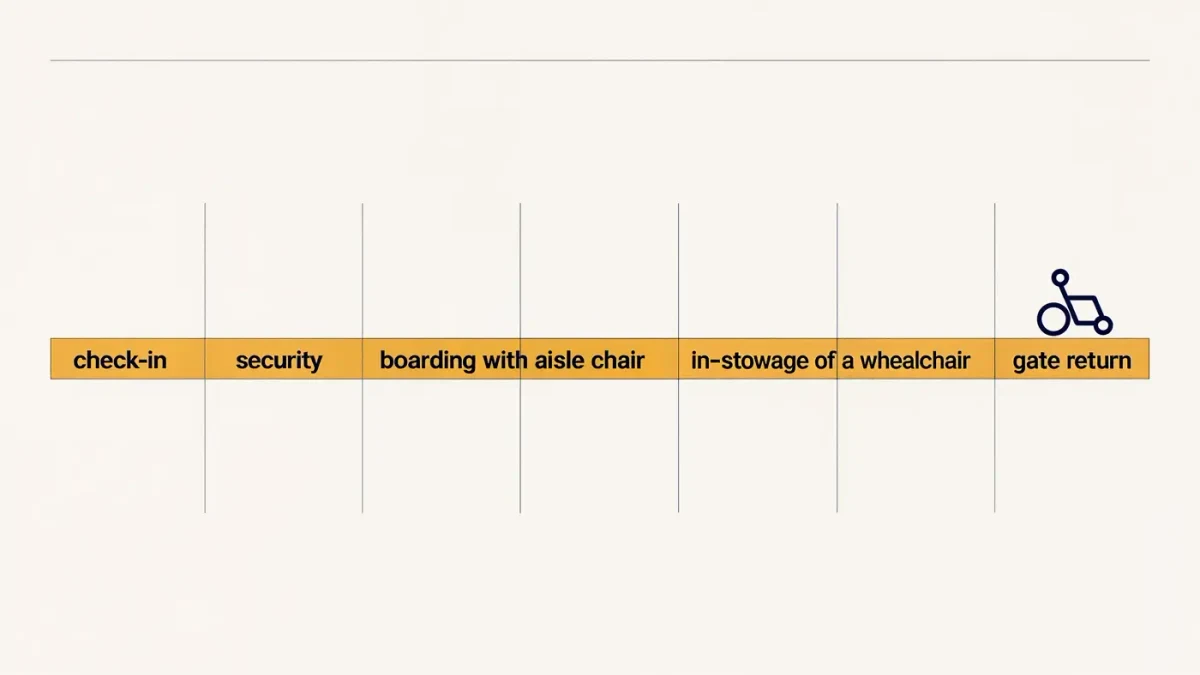
From the moment a passenger arrives at the terminal, the airline is responsible for providing assistance on request: help reaching the gate, moving through security to the plane, boarding, stowing and retrieving carry-on items, and transferring to an aisle chair — the narrow wheelchair used to reach a seat down the aircraft aisle. Assistance must be provided whether or not the passenger travels with a companion, and airlines cannot require a companion to perform these tasks.
A few rules matter in practice. Passengers who need assistance should notify the airline in advance — generally at least 48 hours — for services like seating accommodations, though airlines must still provide obvious assistance even without notice. Airline staff and contractors must receive hands-on training in how to transfer a passenger safely and how to operate an aisle chair, because rough transfers are one of the most common injury points reported by wheelchair users.
What happens to your wheelchair during the flight?
Manual folding wheelchairs get a specific protection: the airline must stow one folding wheelchair in the cabin on a first-come, first-served basis, with priority over other carry-on items for passengers who pre-board. Battery-powered wheelchairs travel in the hold, and the rules require airlines to stow them so that they can be retrieved promptly on arrival. Spillable and lithium batteries each have their own handling requirements, which is why airlines ask detailed questions about the battery at booking — passengers should know their battery type before they call.
The rules also address timing. When a wheelchair is checked, the airline must return it to the passenger in the condition it was received, and if it is lost or damaged, the airline must provide a loaner wheelchair and arrange for the repair or replacement of the traveler's own chair. Unlike ordinary checked luggage, where liability was historically capped at modest amounts, DOT rules treat a wheelchair as the mobility equipment it is: the airline must restore the passenger to the same class of equipment, not simply cut a small check.
What did the newer DOT rules change?
For years, the weakest link was mishandling: wheelchairs broken in cargo holds, returned weeks later, with no clear standard for what "fixed" meant. The Department of Transportation finalized a rule in 2024 that tightened this area. Among its key provisions: airlines must repair or replace a wheelchair that is lost or damaged with an equivalent or identical chair, they must provide a suitable loaner in the meantime, and they face defined penalties when they fail. The rule also set clearer requirements for how airlines handle wheelchair stowage and for prompt return at the gate.
Advocates pushed for more — including a requirement for an accessible lavatory on new single-aisle aircraft, which remains one of the sharpest unresolved limits of flying while disabled. The ACAA as enforced today gets a wheelchair user onto the plane and their chair back afterward; it does not yet guarantee a usable restroom in the air.
How do you file a complaint when things go wrong?
The first step is the airline's own complaint resolution officer, or CRO. Every US carrier must have one available, and the CRO has authority to resolve disability complaints on the spot — including decisions about whether a passenger can fly. Ask for the CRO by name at the gate or ticket counter; the airline must provide one promptly.
If the airline does not resolve the issue, travelers can file a disability complaint directly with the DOT, which publishes complaint data by airline each year. Those filings matter beyond the individual case: DOT enforcement actions and the annual complaint numbers are what pushed carriers to improve wheelchair handling, and the 2024 rule itself grew out of years of documented failures. Filing is one of the few levers that changes the system, not just the flight.
What should wheelchair users do before every flight?
Practical preparation shortens most problems. Call the airline at least 48 hours ahead and document the conversation. Know your wheelchair's dimensions, weight, battery type and folding mechanism, and consider attaching written instructions to the chair itself before gate-checking it. Arrive early, request pre-boarding, and ask that your chair be returned at the gate rather than at baggage claim. Take a photo of the chair before handover — it makes damage claims straightforward.
None of this should be necessary. A passenger using a wheelchair is buying the same ticket as everyone else. But knowing the specifics of the ACAA turns a system built around assumptions of walking passengers into one where, with preparation and paperwork, the right to fly can actually be exercised.