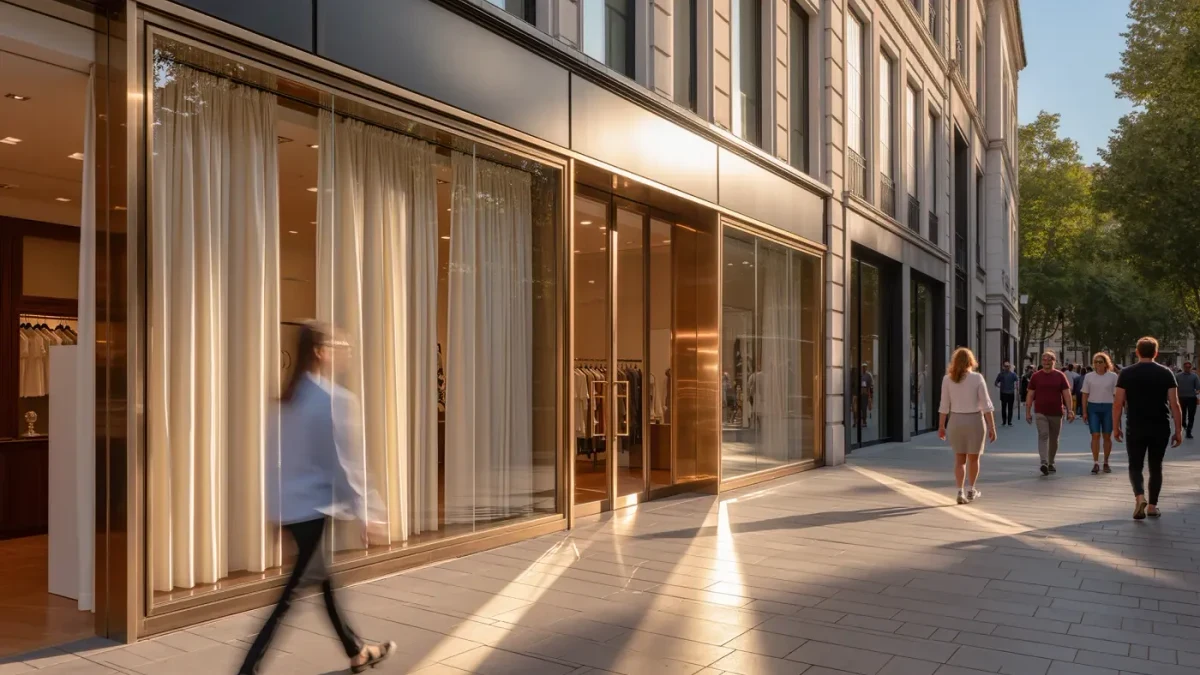
Sensory-friendly hours are fixed shopping windows during which a store dims its lighting, turns off or lowers music, pauses trolley collections and public-address announcements, and sometimes staffs a quieter checkout — and for autistic shoppers, they change whether a grocery run is possible at all. The idea has spread quickly: major retailers in the United States, Canada and the United Kingdom, including supermarket chains that pioneered "quieter hours" in 2018, now run such programs weekly. The need is not small. The CDC's Autism and Developmental Disabilities Monitoring Network estimated in 2025 that about 1 in 31 eight-year-old children in the United States is autistic.
What exactly happens during a sensory-friendly hour?
The core promise is predictability. Fluorescent overhead lights are dimmed or partially switched off, and flickering or buzzing fixtures — a real barrier for people sensitive to visual strain — get attention where the building allows. Background music and promotional loops go silent. Stores pause non-essential announcements over the public-address system and ask staff to avoid page calls where possible. Trolley and basket collection is rescheduled so the scraping and clattering of carts stops.
Many retailers also mark a "quiet lane" at checkout, where beeps are lowered, staff avoid small talk unless the customer initiates it, and the pace is deliberately slower. Some stores publish a one-page visual guide in advance: photos of the entrance, the aisles, the checkout, so shoppers know the layout before they arrive. That sounds like a small courtesy. For an autistic person who plans each outing in detail, knowing the environment in advance is often the difference between going and staying home.
Why do lights and sound make shopping hard?
Autism frequently involves differences in sensory processing. Sounds, light and motion that a non-autistic shopper filters out automatically can arrive with full force: multiple music sources, refrigerator hum, scanner beeps, strip lights, moving crowds. The result is not mere annoyance. It can be sensory overload — difficulty processing that can lead to anxiety, physical pain, shutdown or the need to leave immediately, often abandoning a half-filled cart.
Surveys by autism organizations have consistently found that unpredictable noise and bright lighting rank among the top reasons autistic people avoid shops, and by extension avoid errands most people never think about. When a store removes those stressors for two hours a week, it is not offering a perk. It is opening a door that was functionally closed.
Who runs these programs, and since when?
The best-documented start came from UK supermarkets: in 2018, the chain Morrisons introduced a "Quieter Hour" on Saturday mornings across its stores, developed with the National Autistic Society, dimming lights and pausing music, tannoy announcements and checkout beeps. The concept crossed borders quickly. Cinema chains, museums and family entertainment venues adopted similar sessions — the Smithsonian, for example, has run sensory-friendly morning programs for visiting families — and US and Canadian grocery and clothing retailers followed with their own weekly windows.
The consistent pattern across programs is that they were designed with, not for, the autistic community. Organizations such as the National Autistic Society and local autism advocacy groups advised on which stimuli to reduce and trained staff on what to expect. That detail shows up in practice: in well-run programs, staff do not treat the hours as a novelty but as a routine part of the week, announced on the same schedule every time.
What do autistic shoppers and their families say changes?
The practical gains are concrete. Parents describe completing a full grocery shop with an autistic child for the first time without a meltdown forcing an exit. Adults who had shifted to online-only shopping report returning to stores, comparing prices in person and reclaiming the small social contact of a neighborhood shop. Some shoppers with sensory processing differences unrelated to autism — including people with PTSD, migraine conditions or hearing aids — say they time their errands to the same windows.
There are honest limits. The hours are usually weekly, not daily, so a shopper who works or has caregiving duties at that time still has no workable slot. Stores in older buildings sometimes cannot dim lighting without a full electrical retrofit. And a quiet hour loses its value if a delivery truck unloads outside the door at the same time. Advocates generally say the next step is not more symbolic hours but more consistent ones — fixed times, clearly published, that shoppers can plan their week around.
How can you find sensory-friendly hours near you?
Most retailers that run the programs list them in the store locator or accessibility section of their websites, and many promote them through local autism organizations, which keep regional calendars of sensory-friendly events — shopping, cinema, museum and theater sessions alike. Calling ahead and asking two specific questions works well: whether the store observes the hours every week at the same time, and whether a visual guide of the layout is available.
If a store near you does not offer one, asking helps more than people expect. Retailers have repeatedly said the programs began after customers requested them, and the operational cost is low: it is mostly a schedule change, not a construction project. A request from a few regular customers, backed by information from an autism organization about how such hours run elsewhere, has been the starting point for many of the programs now in place.
Do the hours signal something larger?
In a narrow sense, sensory-friendly hours are an accommodation — a scheduled adjustment to a shared space. In a broader sense they are an admission that standard retail design assumed one kind of nervous system, and that the assumption quietly excluded a lot of people. The fix turned out to be surprisingly cheap, which raises a fair question about why it took so long.
The most useful way to read the trend is as a proof of concept. If dimming lights and silencing music for two hours a week brings autistic shoppers back through the door, then the barrier was never the shopping itself. It was the environment, and environments can be edited — a little at a time, on a schedule that families can finally count on.