On certain weekend mornings, before a museum opens to the general public, the galleries run differently: lights are raised gently rather than at full blaze, films play with sound lowered, audio guides keep to a predictable route, and a quiet room with soft seating stands ready for anyone who needs to leave the noise behind. The best-documented version is the Smithsonian's Morning at the Museum, a recurring sensory-friendly program run by its accessibility office for children, teens and young adults with cognitive and sensory processing disabilities and their families. Hundreds of museums across the United States now run something on the same pattern, and the shared design is remarkably consistent.
Why the standard visit is hard
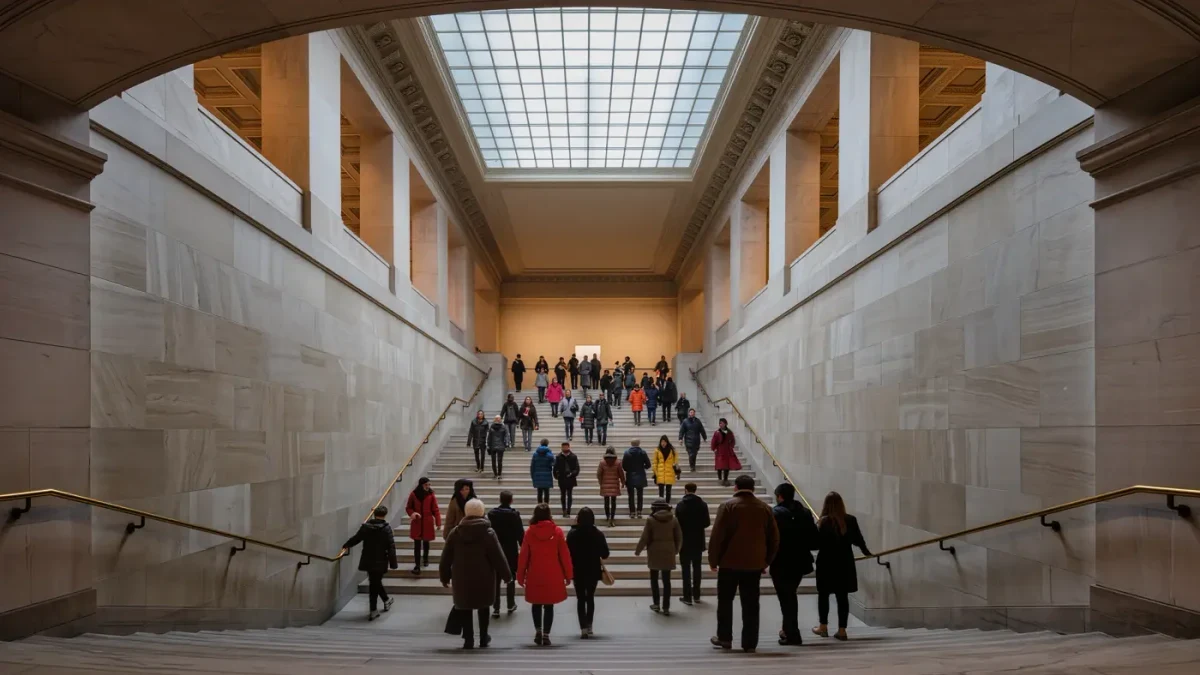
Museums are, by default, sensory minefields: echoing marble halls, unpredictable crowds, alarms, video installations playing at full volume, and rules delivered by staff whose job description includes stopping people from touching. For autistic visitors, each element adds load, and the visit that a family plans for weeks can collapse within minutes of arrival — a meltdown in a lobby, an exit through a gift shop, a drive home in silence.
Families describe the arithmetic plainly: the price of a failed trip is paid for days afterward, in exhaustion and a reluctance to try again. Sensory-friendly programming exists to change the variables so the math works — not by removing the museum, but by removing the ambushes.
The anatomy of a sensory-friendly morning
The template most museums follow has a handful of stable parts. The program runs before regular hours, so the crowd is small and the audience is entirely families like yours — which parents consistently name as the single most important feature, because no one stares at a child who is flapping, humming or lying on the floor. Sound is turned down or off in multimedia galleries, lighting is adjusted where dimmers allow, and announcements are kept to a minimum.
A pre-visit guide — a photo storyboard showing the entrance, the coat check, the galleries, the bathrooms, the quiet room — is published in advance, so the visit is rehearsed before it happens. Trained staff and volunteers are posted through the building, briefed not just on logistics but on the attitude: follow the child's lead, answer questions genuinely, treat stimming as normal. Hands-on carts and touchable objects are often out, because for many autistic visitors the prohibition on touching is the museum's most painful rule.
Who designs these programs?
The programs that work are built with autistic people, not merely for them. Museum accessibility offices routinely consult self-advocates and occupational therapists on which galleries overstimulate and which exhibits anchor attention, and they pilot sessions with families before publicizing them. The Smithsonian's accessibility team, one of the oldest in the country, shares its practices with peer institutions, which is a large part of why a sensory morning in Ohio or Texas resembles one in Washington, D.C. — the field learned from a common source.
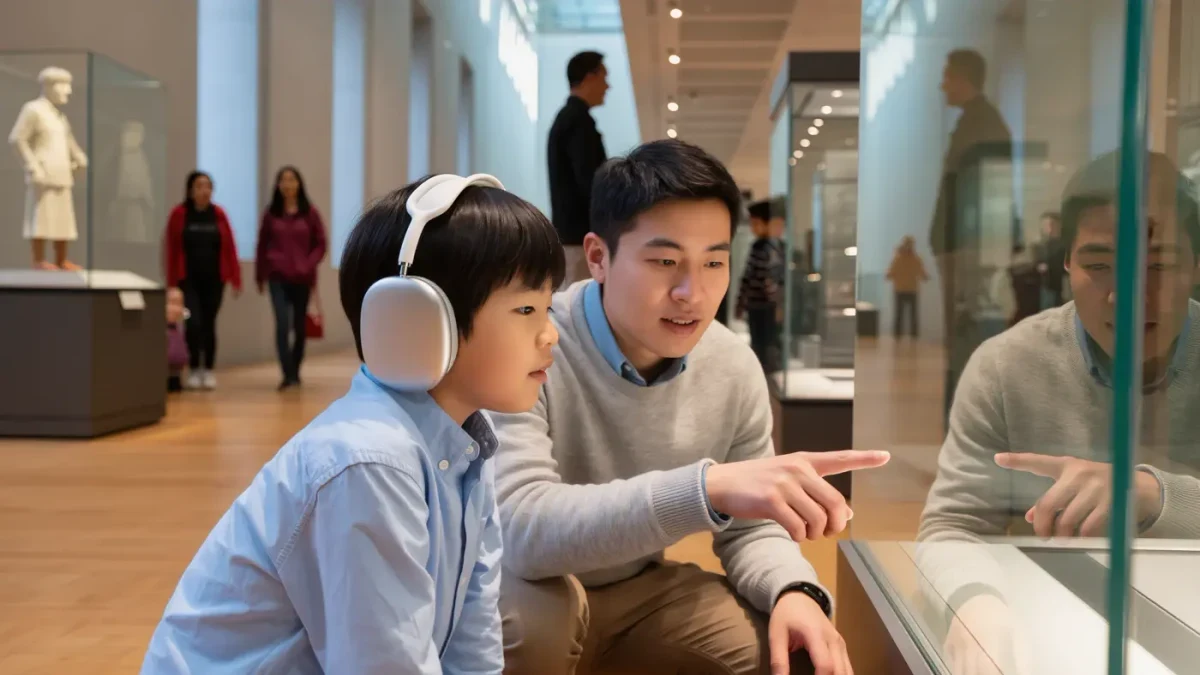
Partnerships matter too. Local autism organizations supply the audience and the expertise; museums supply the space and the collections. Some institutions extend the model beyond one-off mornings into regular offerings: sensory-friendly maps marking the calmest routes through permanent galleries, kits with noise-reducing headphones available at the front desk, and relaxed performances in planetariums and theaters.
What families say a good visit feels like
The recurring testimony is not about dinosaur bones or paintings. It is about being somewhere public, as a family, without performing normalcy. Parents describe a child who has failed at movie theaters and malls standing in front of an exhibit, absorbed, for twenty minutes. Self-advocates describe being able to ask a docent a question without first calculating whether the conversation will go wrong. Museum staff, for their part, often report that the sensory mornings are their favorite shifts — the pace is humane, and the point of the work is visible.
There are honest limits. Sessions are typically monthly, so they cannot structure a family's whole calendar. Programs aimed at children can leave autistic adults feeling uninvited, though several museums have begun running teen and adult events in response. And a quiet morning does not fix a building with no quiet room, which is why the strongest programs pair the events with permanent changes — the maps, the kits, the trained permanent staff.
How to find or request one
Museum accessibility pages are the first place to look; institutions running programs list dates, registration and pre-visit materials there, and regional autism organizations maintain calendars of sensory-friendly events, museum mornings among them. If a museum near you has nothing, a call to its education or visitor services department is worth making — accessibility offices report that programs frequently began after a handful of families asked, and a museum that will not start one may still offer headphones, early entry or a quiet space on request.
The deeper story is what the model says about museums themselves. The nineteenth-century museum was built on a single imagined visitor: quiet, standing, hands behind the back. Sensory-friendly mornings quietly retire that visitor. In their place comes a broader idea — that a museum is a public good, and a public includes people whose senses work differently, whose bodies need movement, and whose attention, when it is protected rather than ambushed, is among the most serious a gallery will ever hold.