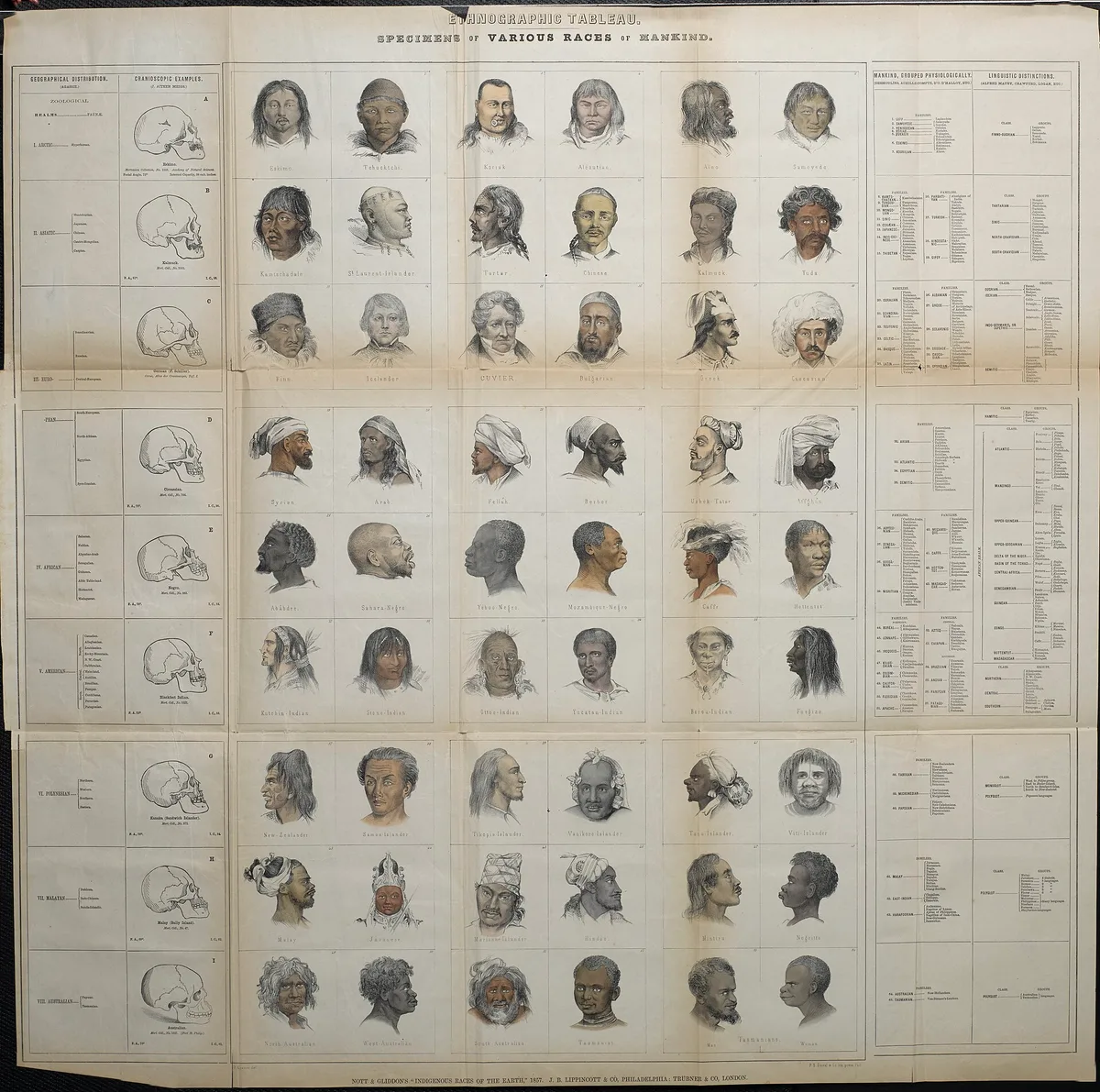
On September 17, an audience filled the Wren Chapel at William & Mary to mark the publication of Professor Michael Blakey's three-volume series, The Blinding Light of Race: Race and Racism in Western Science and Society. The event, covered by the university's Anthropology department, is the news hook. The lasting question the books raise is bigger: how did Western science come to organize human beings by race in the first place, and what did that organization cost?
Blakey's series, per the William & Mary Anthropology department, charts the scientific and social origins of White supremacy, which the department describes as embedded within Christian chauvinism and set against European colonialism and American slavery. Professor Mark Anderson of UC Santa Cruz called it the "magnum opus of a truly exceptional career." At the event, Blakey said the work seeks to "end White supremacy."
This guide is a reader's map to what the series covers, why a scholar-activist tradition matters, and what the celebration itself — held in a building where, as Blakey reminded the audience, enslaved people once labored and slept — tells us about how institutions face their own histories.
What does the book series actually cover?
The three volumes span a wide arc of history. According to the department's account, the topics include social Darwinism, eugenics, Jim Crow, the Holocaust, the Civil Rights Movement, and affirmative action. That range matters. It treats race not as a single bad idea but as a system that kept reinventing itself — dressed in religious superiority at one point, in scientific classification at another, in law and policy at another. Readers following this should also see What Mixed-Income Housing Actually Delivers, According to Research.
The series also weaves in Blakey's own story and experiences. That choice is part of a long tradition in which scholars study the structures that shaped their own lives, and it is one reason colleagues describe the work in personal terms. Gomez called Blakey "an exemplar of the scholar-activist tradition," per the department's write-up. We covered a connected angle in Paid Family Leave: Which States Have It and Who Still Waits.
Who is Michael Blakey, and why does his earlier work matter here?
The roundtable discussion spotlighted Blakey's pioneering work at the New York African Burial Ground, per the department's account. That project is the reason many readers already know his name: it brought the remains and histories of enslaved Africans in New York into public view and treated them with scientific care and community accountability at the same time.
The connection between that project and this book is direct. Both ask who gets studied, who does the studying, and who benefits. A scholar who spent years handling the physical evidence of slavery writes about the science of race from the inside of that evidence.
What is the scholar-activist tradition?
The phrase came from Professor Michael Gomez — Professor of History and Middle Eastern and Islamic Studies and Director of NYU's Center for the Study of Africa and the African Diaspora — at the event. It describes scholars who do rigorous research and then connect it to the communities it concerns, rather than stopping at the journal door.
Blakey's stated aim for the series, in his own words at the event, is to "end White supremacy." That is an unusual sentence to hear from an academic about a book, and it is the clearest signal of where he stands in that tradition. The research is the documentation; the purpose is the change.
Why did the celebration happen in the Wren Chapel — and why does that matter?
Place carried the evening. Blakey closed the discussion by reminding those gathered of the enslaved individuals who once labored and slept in the very building where they sat. The department's account calls the remark poignant, and it is hard to read it any other way: a book about the origins of race thinking, celebrated inside a structure built in an era when people were treated as property.
The evening's details were deliberate. Dean Suzanne Rait of the College of Arts & Sciences gave welcoming remarks. Professor Joe Jones, Director of the Institute for Historical Biology and of the Anthropology department, moderated a roundtable with Blakey, Anderson, and Gomez. Attendees exited to "Tomorrow (Sadio)" by Salif Keita, and a reception followed in the Great Hall of the Wren Building. The event was sponsored by Africana Studies, American Studies, and Anthropology, with support from the College of Arts & Sciences.
How can a reader use these volumes?
Copies are available for purchase, per the department's announcement. For a general reader, the series works as a reference shelf rather than a single sitting: each volume takes up a distinct phase of how race was built into Western science and society, from social Darwinism through eugenics and Jim Crow to the Civil Rights Movement and affirmative action.
A practical approach: read the volume closest to the question you actually have. If the question is how pseudo-science justified policy, start with the sections on eugenics and social Darwinism. If it is how movements pushed back, the Civil Rights Movement material is there. The personal thread woven through the volumes means it can also be read as one scholar's account of a career spent inside these questions.
What happens after a book like this?
A publication is a beginning, not an ending. The books now exist to be read, argued with, taught, and cited. Blakey's own framing — a work that seeks, in his words, to end White supremacy — sets a standard for what the reading is for. The evidence in the volumes documents how the idea of race was constructed and enforced across centuries of Western science and society. What remains unknown is what a new generation of readers will do with that documentation, and whether institutions like the one that hosted the celebration continue the reckoning Blakey modeled when he named the people who once labored where his audience stood.