Women's suffrage history is usually told through a short list: Susan B. Anthony, Elizabeth Cady Stanton, maybe Alice Paul. That list is not wrong. It is just badly incomplete. The campaign for the vote ran for more than seventy years in the United States, and most of the people who kept it alive never got a monument, a holiday, or a chapter in a school textbook.
This piece is about those people — the organizers, lecturers, and foot soldiers whose work made the famous names possible. It draws on the documented record of the movement and on general historical knowledge of the period; where a claim is contested or thin, the text says so. The vote itself arrived with the Nineteenth Amendment in 1920, but the story of who did the work is older, messier, and far more crowded than the monuments suggest.
Where did the movement actually begin?
The conventional starting point is the Seneca Falls Convention of 1848, a two-day meeting in upstate New York organized by Elizabeth Cady Stanton, Lucretia Mott, and other reformers. Its most famous product was the Declaration of Sentiments, a document modeled on the Declaration of Independence and asserting that women deserved full standing as citizens. But a convention is a spark, not a fire. What turned Seneca Falls into a movement was decades of unglamorous work: state campaigns, petition drives, and lecture circuits that ran on train timetables and borrowed living rooms.
That work fell heavily to women whose names rarely appear in the monuments. Matilda Joslyn Gage co-authored the multi-volume History of Woman Suffrage alongside Stanton and Anthony and pushed a more radical analysis than her better-known collaborators. Abby Kelley Foster spent years on the abolitionist and suffrage lecture circuit, facing hecklers and threats, long before the vote was in reach. Their reward, in many cases, was to be edited out of the story by the very archives that recorded their allies.
Who did the organizing nobody remembers?
Movements run on logistics, and suffrage logistics were enormous. Every petition needed signatures gathered door to door. Every convention needed halls booked, funds raised, and travel arranged in an era when a woman traveling alone invited suspicion. Much of that labor came from women who held day jobs as teachers, seamstresses, and farmers' wives, and who organized in the hours left over. We covered a connected angle in Public Libraries Are the Last Real Third Places Left.
Consider the county-level workers of the National American Woman Suffrage Association's state campaigns. A state referendum might fail by a few thousand votes, and the difference was made by women who spent months canvassing small towns, distributing leaflets, and answering the same arguments at kitchen tables. When the campaign succeeded, newspapers credited the national officers. When it failed, the local organizers absorbed the loss and started again. That asymmetry — credit flowing up, cost flowing down — is one of the oldest patterns in social movements, and suffrage was no exception.
What role did Black women play?
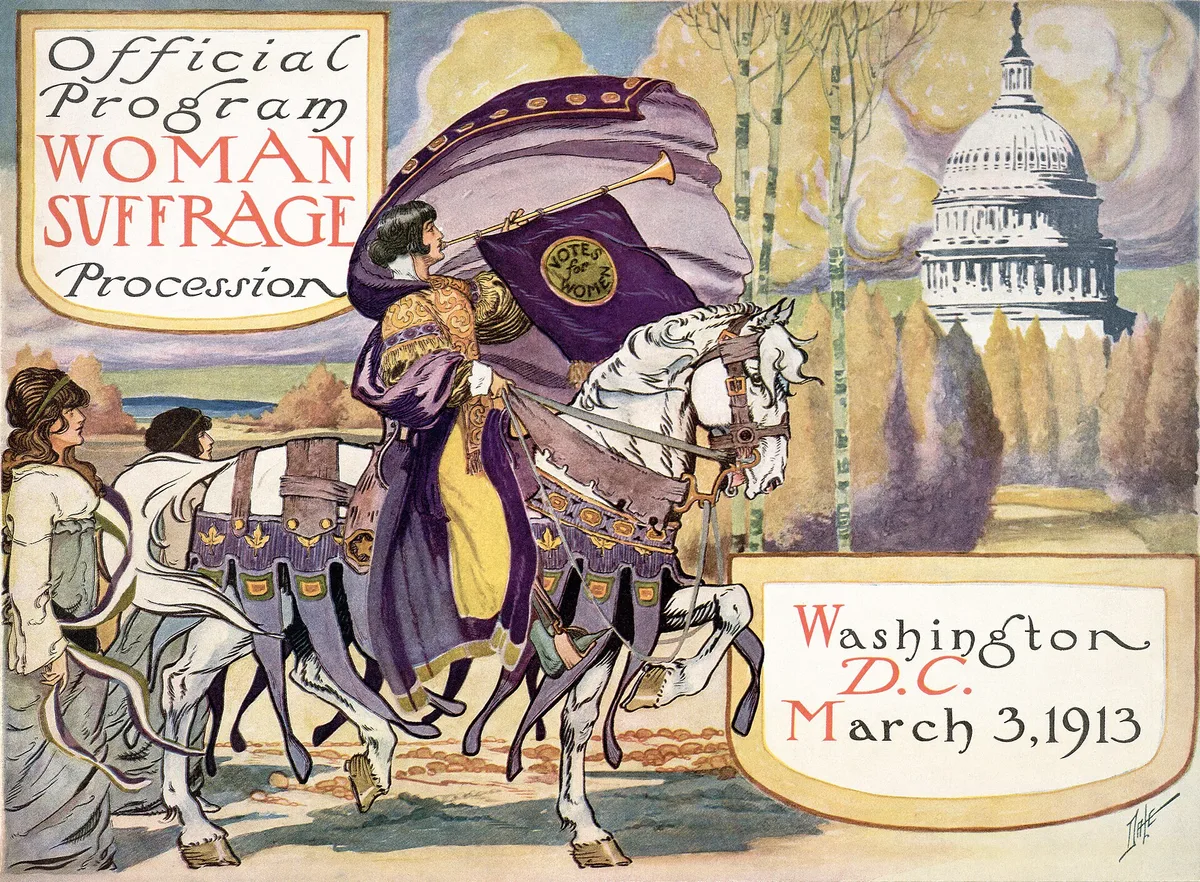
Black women were central to the fight for the vote, and their story is the clearest case of the monuments getting it wrong. Sojourner Truth spoke at suffrage gatherings in the 1850s and confronted white suffragists who wanted the movement to center white women's claims. Frances Ellen Watkins Harper addressed the movement's conventions and pressed the point that suffrage without racial justice was a half-measure. Ida B. Wells-Barnett, the anti-lynching journalist and organizer, famously refused to march in the back of a 1913 Washington suffrage parade when organizers tried to segregate the procession; she stepped into the Illinois delegation as it passed.
After 1920, the gap between the amendment's promise and its practice fell hardest on Black women in the South, where poll taxes, literacy tests, and violence blocked the ballot for decades. Their organizations — club movements, church networks, civic leagues — kept pressing for the vote the amendment had promised. That the fight continued long after the victory parade is one of the central facts of women's suffrage history, and one the textbook version often skips.
Why did the famous names overshadow everyone else?
Part of the answer is deliberate. Susan B. Anthony spent her later years shaping how the movement would be remembered, and the official history she co-authored gave generous space to her own circle. Movements that need institutional memory also need sponsors, and the women who controlled the archive controlled the story. Later, the early twentieth-century suffrage organizations built their own heroic narratives around parades, pickets, and prison hunger strikes — dramatic, newsworthy, and easier to memorialize than forty years of petition drives.
The broader pattern is familiar to anyone who follows how history gets recorded. As HISTORY's own topic index shows, the publisher's topics page files Women's History alongside Black History, LGBTQ+ History, and Native American History as one of the major chapters of the American story — a useful reminder that the archive now treats these as subjects in their own right, not footnotes to a general narrative. Recovery of the overlooked names has been one of the great projects of the last several decades, carried out by historians working through letters, minutes, and local newspapers.
What does this history mean now?
Our analysis: the suffrage story is best read not as a statue but as a relay. The famous names carried the baton for the stretches that got recorded. The unsung figures — Gage and Foster in the archives, Wells-Barnett and Harper in the parades and conventions, the unnamed canvassers in the county campaigns — carried it the rest of the way. A movement's public memory is written by whoever holds the pen, and the pen is rarely held by the people doing the most work.
That has practical weight today. When organizations celebrate their own histories, the question worth asking is not only who is on the plaque but who is missing from it — and what the record would look like if the door-to-door workers got the same archival care as the presidents. The vote was won by a crowd. The crowd deserves the whole story.
Where the record still falls short
Historians have done much to recover these figures, but gaps remain. The working-class women, immigrant organizers, and rural campaigners of the movement are documented unevenly, often only in local newspaper accounts and organizational minutes. Some names we know only because a better-known colleague mentioned them in a letter. That is the honest state of the record: fuller than it was, thinner than it should be. The evidence establishes who some of these women were and what they did; it cannot tell us everything they carried. For related coverage, see Paid Family Leave: Which States Have It and Who Still Waits.