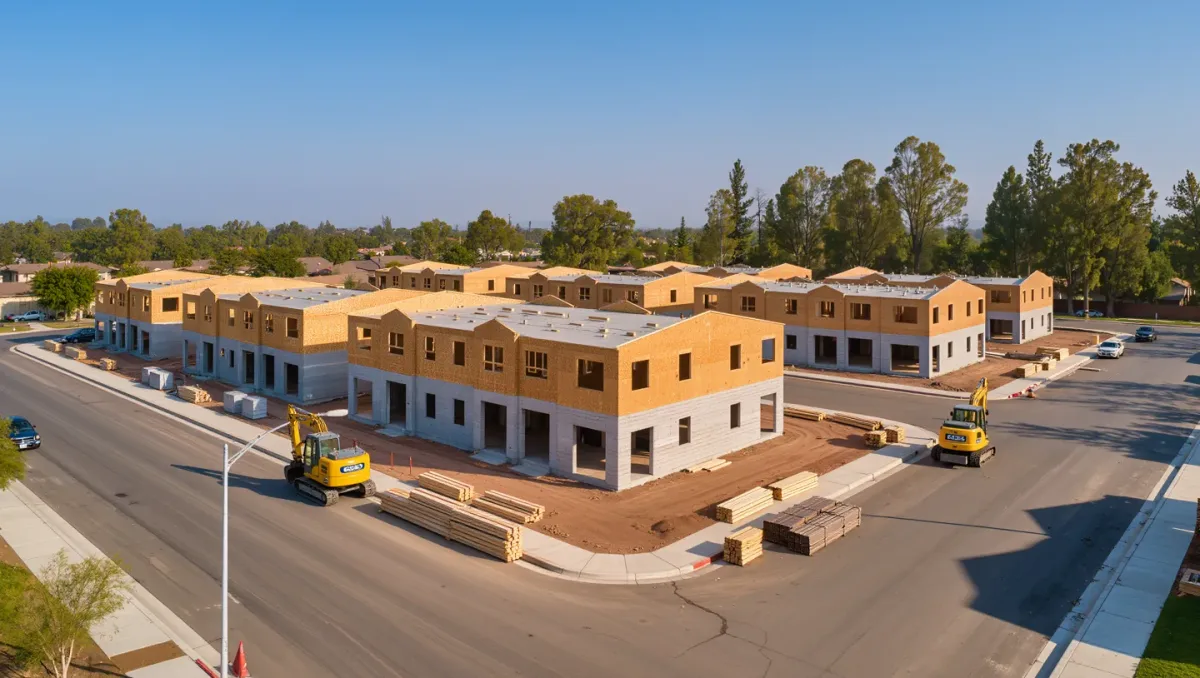
Mixed-income housing promises two things at once: homes people can afford, and neighborhoods where incomes blend. The research record, summarized in reviews by the Urban Institute and academic housing scholars, delivers a careful verdict — solid gains in housing quality and neighborhood conditions, far weaker evidence of the social mixing the model is named for.
What is mixed-income housing, concretely?
The idea covers several formats that share one trait: units at different price points in the same development or district. A building might set aside a share of apartments at below-market rents, a city might require affordability in a private project, or a housing authority might rebuild a public housing site with market-rate units woven in.
The third version became especially common after the federal HOPE VI program, launched in the 1990s, funded the demolition and redevelopment of distressed public housing into lower-density, mixed-use neighborhoods. What followed was a long natural experiment on what happens when poverty is deconcentrated rather than relocated.
Where did the idea come from?
The intellectual roots run through two natural experiments. Chicago's Gautreaux program, created by court order in 1976, helped thousands of Black families move from public housing to low-poverty suburbs, and follow-up studies found children who moved fared better in jobs and education — findings that convinced many policymakers that neighborhood mattered. The federal Moving to Opportunity experiment of the 1990s complicated the picture, with early results muted, though later analyses found children who moved young earned measurably more as adults.
Mixed-income housing took a different lesson from the same impulse: rather than moving families to opportunity, rebuild the opportunity on the site itself. If poverty's harms concentrate, the reasoning went, then deconcentrating poverty by rebuilding distressed projects as income-diverse neighborhoods should spread those harms out. That theory is exactly the part the outcomes research has found hardest to confirm — the buildings changed, the address changed, and the social network across incomes mostly did not.
What do residents on the affordable side gain?
The most consistent findings concern bricks and services rather than neighbors. Families who moved into redeveloped mixed-income sites reported better housing quality, safer surroundings and access to neighborhoods with lower poverty rates, better-performing schools and more job proximity than the public housing they left.
Those are not small things. Housing researchers repeatedly find that relocation away from concentrated poverty correlates with improved mental health for adults, partly through reduced stress and perceived danger. In a field where good news is scarce, that counts.
Does social mixing actually happen?
Here the evidence thins out. Studies of HOPE VI successors and Chicago's Plan for Transformation repeatedly found that market-rate and subsidized residents occupied the same buildings while living parallel lives — different entrances in some cases, different playgrounds, no meaningful social ties. Researchers describe interaction as superficial: polite, sparse, rarely turning into the networks that theory says should carry job leads and social capital upward.
A frequently cited review of mixed-income development research concluded that outcomes for original residents were mixed overall, with the clearest benefits in housing and neighborhood conditions and the murkiest in income, employment and social connection. The social-engineering half of the promise has been the hardest to keep.
What about the people who never moved in?
Critics raise a fair structural point. Redeveloping a public housing site into a mixed-income neighborhood usually means the total number of deeply affordable units shrinks on that land. Former residents who could not return — because of screening, smaller unit counts or lease requirements — scattered to other neighborhoods, sometimes to worse ones.
So the accounting depends on the denominator. Per resident housed, mixed-income sites often look good. Per unit of deep affordability originally on the site, the ledger can look worse. Honest evaluations publish both numbers.
Design carries part of the blame and part of the fix. Where units are visually distinguished, entrances split, or amenities de facto reserved by price, residents read the message quickly and act on it. Where a development is genuinely uniform — same doors, same courtyards, same mailboxes — the social distance narrows, even if it never fully closes.
Do property values and crime change?
Studies of affordable housing placed in higher-income areas, including large analyses of developments in the Northeast and Midwest, have generally found no meaningful drop in nearby property values and no rise in crime, contrary to the fears voiced at zoning hearings. Some research even finds modest positive effects on surrounding values when distressed sites are replaced.
The perception gap is stubborn, though. Public comment at planning meetings reliably predicts neighborhood opposition, and reliably poorly predicts measured outcomes.
What separates the projects that work?
Evaluations point to a few recurring factors in better-performing developments:
- Genuine affordability depth, so the subsidized units serve the same population the site originally housed, not just moderate incomes.
- Shared amenities with no separate doors, because design choices decide whether mixing is physical or only nominal.
- Services attached — childcare, transit, job placement — which do more for mobility than neighborly proximity does.
- Right-to-return policies that let former residents come back without disproportionate screening.
What is the honest bottom line?
Mixed-income housing reliably delivers better homes in better-situated neighborhoods for the people who get in. It does not reliably deliver cross-class friendship, and it can trade a large quantity of deep affordability for a smaller one unless the unit count is protected.
For a reader weighing a proposal in their own town, the useful questions are practical ones. How many units are affordable, at what income levels, for how long? Who gets first claim? Is there one front door? The research says those details, more than the label on the rendering, decide whether the promise is kept.