In Los Angeles, a city where a lunch salad routinely tops twenty dollars, a chain of small counter-service restaurants sells scratch-cooked meals for roughly four to six dollars in some neighborhoods and about eight in others. The chain is Everytable, and the price depends on the zip code: locations in lower-income areas charge less, locations in affluent ones charge more. As the health philanthropy Cal Wellness described it in a profile of the company, the model makes good food available to everyone — with the pricing engine doing the quiet work of redistribution.
The founding logic was a complaint turned inside out. Sam Polk and David Foster, who had earlier run a nonprofit feeding people in skid row, kept running into the same wall: healthy food was expensive to prepare, and the people who most needed it could least afford it. Their answer, launched in 2016 with the first locations in Los Angeles, was not a charity kitchen but a business engineered so that its cheapest meals could exist at all — grab-and-go format, small footprints, central kitchens, seasonal menus designed to keep costs down without cutting the nutrition.
How does a restaurant charge two prices?
The mechanism is disarmingly simple. Everytable sets menu prices by location. The Los Angeles Times noted at the chain's launch that a dish might sell for around five dollars in South LA and about eight in wealthier or downtown areas — the same food, cross-subsidized by geography. Customers in Santa Monica or Burbank pay a bit more so customers in Compton or Watts can pay a lot less, and neither group is means-tested at the register. There is no form to fill out, no proof of income, no questions.
Some locations go further, operating pay-what-you-can models in which customers pay what they are able for a meal, no explanation requested. The company also runs a pay-it-forward program, letting customers donate individual or family meals — a practice that expands around the holidays.
The context made the experiment necessary. Los Angeles County contains some of the wealthiest neighborhoods in America and, a short drive away, communities long described as food deserts — places where fresh produce requires a bus ride and the nearest calories come from a liquor store shelf. Diet-related disease follows that geography with brutal consistency. Everytable's founders understood that a charity model could feed people on weekends but could not change what a neighborhood eats on weekdays; for that, they reasoned, you need stores, supply chains and prices that work where the customers actually live.
The no-questions part is not an operational accident; it is the point. Means-testing food turns a meal into an interview. Everytable's founders have argued publicly that dignity is part of the nutrition: people eat better when they are customers, not cases, and the register treats everyone the same way.
Scaling the idea
What makes Everytable a story worth following is that the cross-subsidy kept working as the chain grew past its first storefronts. The company expanded across Los Angeles and into other markets, and began recruiting entrepreneurs from the very neighborhoods it serves: through its franchise and entrepreneurship initiative, backed by millions in raised loan capital, it helps local residents — including people without conventional access to credit — open their own Everytable locations in underserved communities. The kitchen becomes an employer and an ownership pipeline, not just a cheap lunch.
The chain has also pushed into new channels, from delivery to workplace lunch programs aimed at office workers tired of twenty-dollar meals, using the same central-kitchen economics to keep prices under seven dollars. The mission and the margin, so often at war in food businesses, were designed here to need each other.
What the model proves
Skeptics of so-called social enterprises usually ask the right question: what happens when the mission gets expensive? Everytable's answer — imperfect, still unfolding — is that pricing is a design choice, not a law of nature. Restaurants decided decades ago that the same bottle of water costs four dollars at an airport and one at a supermarket; Everytable simply pointed that flexibility at equity instead of extraction.
There are honest caveats. Cross-subsidy depends on enough customers paying the higher price, expansion depends on capital, and a chain is not a substitute for the policy failures — disinvestment, food deserts, wage stagnation — that make a five-dollar meal feel like a miracle in the first place. The company itself frames its work as a response to food insecurity in one of the country's wealthiest regions, not a solution to it.
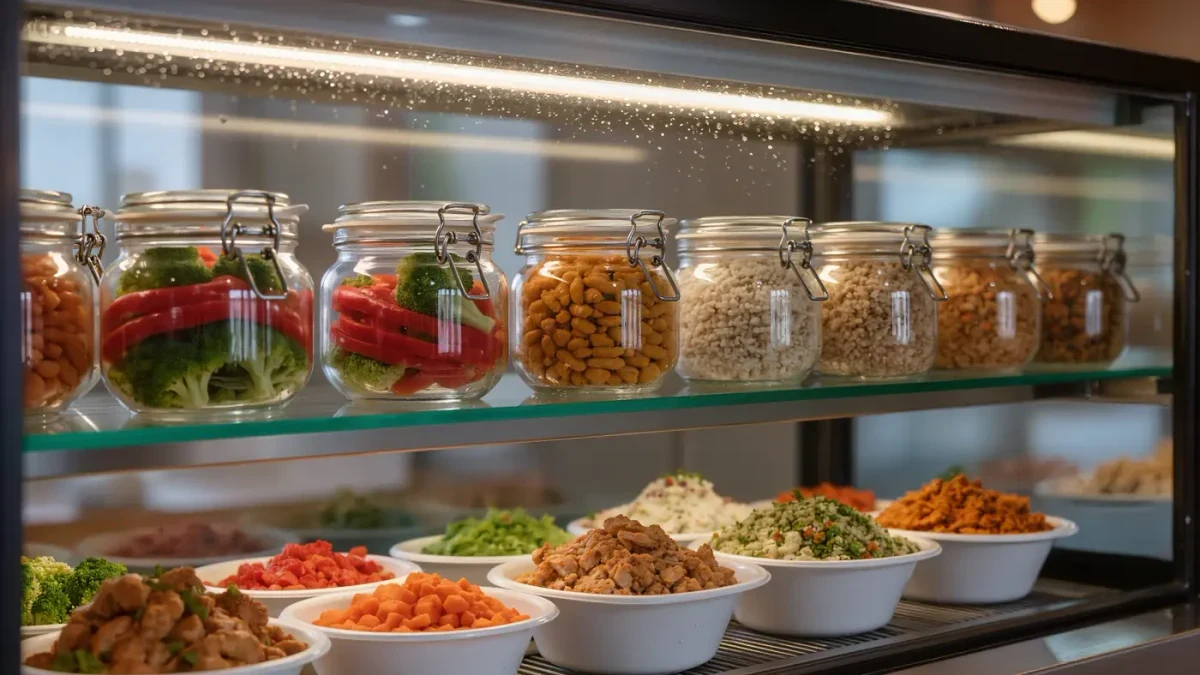
But on an ordinary Tuesday in South LA, the ordinary thing happens: someone walks in, picks up a jar of turmeric chicken and rice, pays less than the cost of a fancy latte downtown, and walks out. Nobody asked them anything. That is the whole design — a city feeding itself, one carefully priced plate at a time.