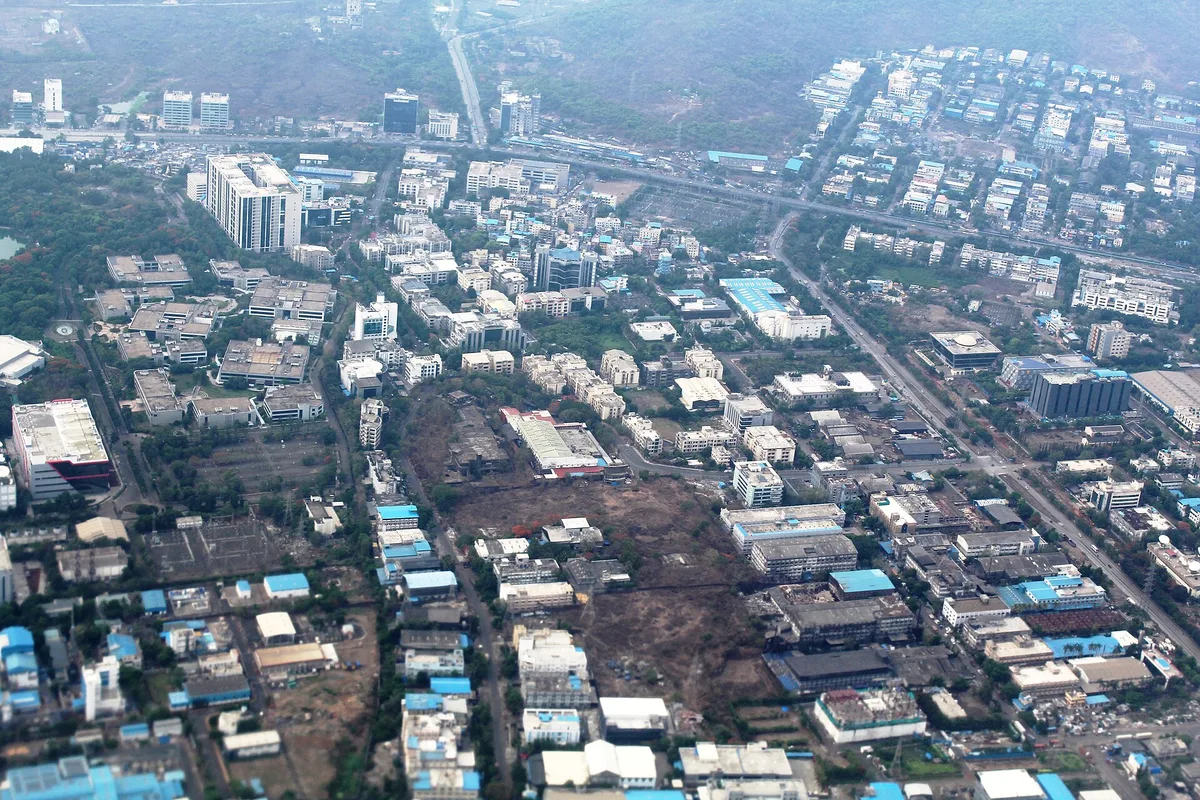
In Boston's Dudley Street neighborhood, where Roxbury meets North Dorchester, something happened in the 1980s that almost never happens: residents of one of the city's poorest neighborhoods took control of the land under their feet. The Dudley Street Neighborhood Initiative, founded in 1984 by residents organizing against disinvestment, arson and dumping, went on to create Dudley Neighbors, Inc. in 1988 — a community land trust that today owns land across the 60-acre Dudley Triangle and carries a power normally reserved for governments: eminent domain.
The origin story is less gentle than the term "land trust" suggests. By the early 1980s, decades of redlining and neglect had left the Dudley area with over 1,300 vacant lots — many used as illegal dumping grounds — alongside families who had stayed through the abandonment. City planners and developers produced blueprint after blueprint for the area; residents watched none of them ask the people who lived there. DSNI's founding generation, anchored by Black, Latino, Cape Verdean and white neighbors organizing door to door, concluded that plans without ownership were paper.
How do you take the land off the market?
The organization's signature move was structural. In the late 1980s, after DSNI's own neighborhood plan won city backing, the city exercised eminent domain on vacant parcels in the Dudley Triangle and turned the authority over to the community's trust, Dudley Neighbors, Inc. — making DNI one of the very few community organizations in the United States with such power over its own territory. The trust owns the land permanently; families and cooperatives buy or rent the buildings on it through long-term leases with resale restrictions. The home is yours. The land is everyone's.
The arrangement is the point. In a conventional market, an improved neighborhood becomes an unaffordable one — the residents who organized the revival get priced out by it. A community land trust breaks that loop by legally holding the land out of speculation, so the affordability organized in 1988 is still enforceable in 2026. Planners have a name for what Dudley built: development without displacement.
What forty years produced
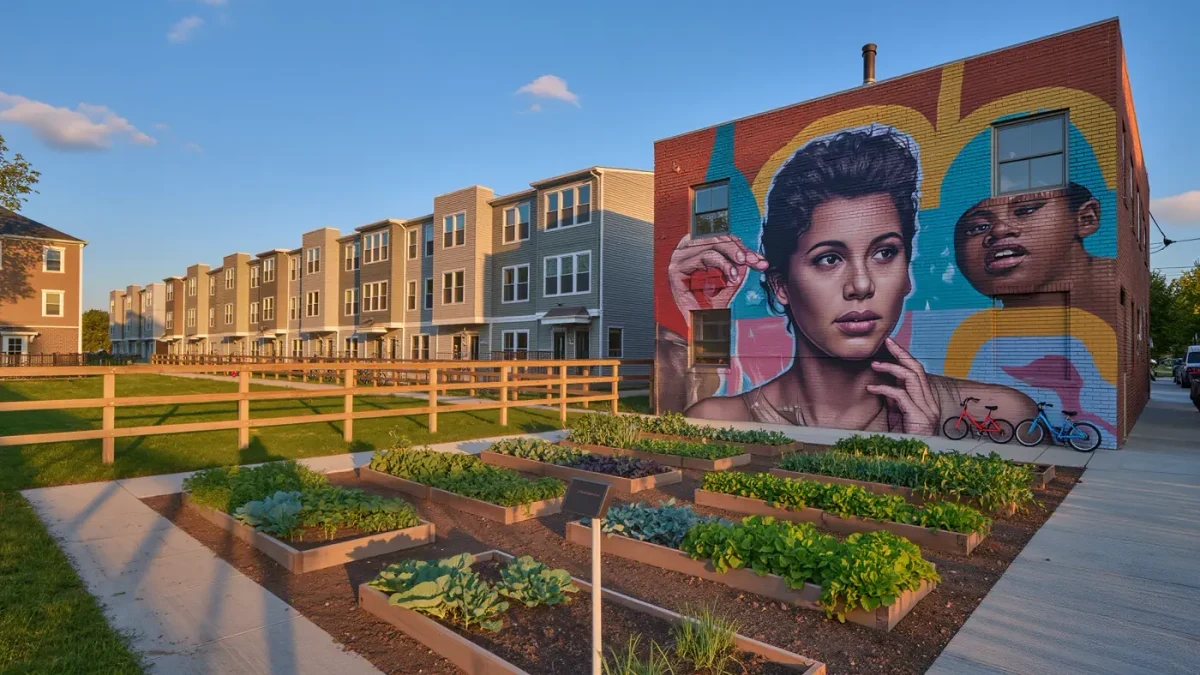
The measurable record is long. Since 1984, more than 300 vacant lots in the Dudley Triangle have been converted into affordable housing, playgrounds, community gardens, a community greenhouse and public facilities — transformation documented by DSNI itself, by land-trust researchers, and by academic archives at MIT and the University of Massachusetts Boston, which hold the organization's papers. New affordable homes, resident-owned gardens, a residents' hall, parks where trucks once dumped rubble: not amenities delivered from above, but assets the community governs through a board elected from the neighborhood, with seats reserved for residents.
The governance detail deserves emphasis. DNI is not a city agency or a developer's advisory board; its controlling votes belong to neighborhood residents, including tenants of trust land. That design — community control as a legal fact, not a courtesy — is what DSNI's four-decade longevity rests on. Neighborhood organizations rise and fall with founding personalities; land trusts, with ownership and elected governance, persist.
The gardens tell the story as well as any ledger. Dudley residents grow food on trust land in lots they control, and the greenhouse and parks sit where burned-out buildings stood when DSNI's founders drew their first maps on church-hall tables. Visitors who walk the Triangle today see an ordinary neighborhood — which is the achievement. The extraordinary part is invisible, filed in deed records: the clause that keeps this ordinary life from ever being bid away.
Why Dudley keeps getting copied
DSNI became the case study cited in community land trust literature worldwide, and the model has spread through American cities facing the same bind Dudley faced: neighborhoods worth investing in only after their original residents are gone. Civil-rights scholars and urban planners making the case for CLTs lean on Dudley precisely because it is not a pilot or a thought experiment — it is a working, aging, ordinary neighborhood institution that has survived recessions, development booms and several waves of Boston politics.
There are honest limits. Land trusts are slow; housing production per year is modest compared to the scale of the affordability crisis; and Dudley's eminent-domain power came through a specific political window in a specific city — an advantage most organizing campaigns cannot simply replicate. DSNI's own materials frame the trust as one powerful tool within continuous organizing, not a substitute for it.
But the core achievement stands, and it is quieter than a revolution: on sixty acres of Boston, the question "who decides what happens to this land?" has had the same answer since 1988 — the people who live on it. That answer took years of meetings, an election, a city ordinance and a permanent legal structure to secure. It has never once been given back.