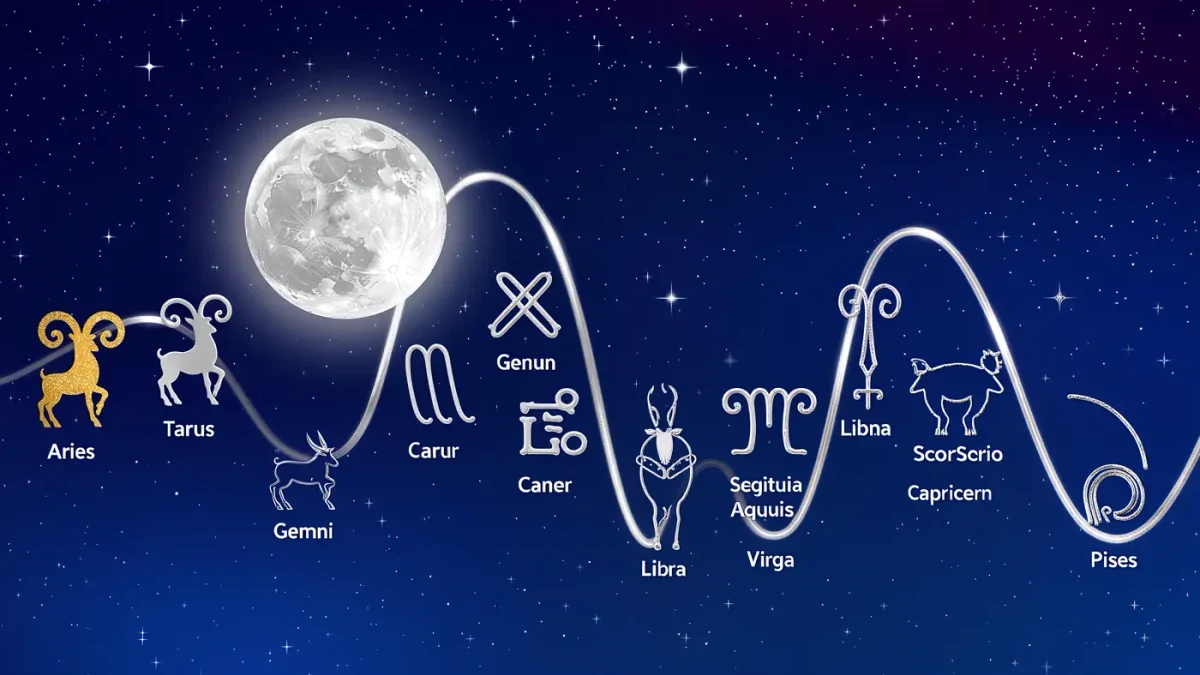
Your moon sign is the zodiac sign the moon occupied at the moment you were born, and in astrological tradition it describes the inner life: emotions, instincts, habits, and the specific conditions under which you feel safe. The sun is who you are trying to become; the moon, practitioners say, is who you are at two in the morning. Because the moon changes signs every two and a half days, placing it requires your birth date, time, and place.
Astrology is an entertainment tradition, not a science; Equality Weekender publishes it as lifestyle content, not prediction or advice.
What does the moon represent in a chart?
In the tradition, the moon is the tide beneath the personality: moods, memory, nurturing, and the body's unthinking rhythms. Classical astrologers linked it to the mother and early childhood, reading the natal moon as a record of how comfort was delivered and received. Modern practitioners phrase it as the inner child or the default setting. Where the sun operates by daylight and intention, the moon operates by reflex. Astrologers note that people often resist their moon sign's description precisely because it names the unguarded self, the one with no company manners.
Why is the moon sign so hard to guess in others?
Because it is structurally private. The rising sign handles introductions and the sun handles ambitions, but the moon only shows itself in unscripted moments: how someone unwinds, what they reach for when stressed, how they behave when they are sick, sleepy, or certain no one is watching. The moon also moves fastest of all chart points, completing the zodiac in about 27.3 days, which is a matter of verifiable astronomy. Two people born on the same date but a few days apart can share a sun and have entirely different moons, which astrologers use to explain friendships that click on a level neither can articulate.
What do the moon signs read like, in brief?
- Fire moons (Aries, Leo, Sagittarius) are read as needing expression, warmth, and something to burn toward; they soothe themselves through action.
- Earth moons (Taurus, Virgo, Capricorn) are read as steadying through routine, touch, and usefulness; disorder unsettles them before they can say why.
- Air moons (Gemini, Libra, Aquarius) are read as processing feeling through conversation and concept; naming an emotion is half of curing it.
- Water moons (Cancer, Scorpio, Pisces) are read as absorbing the room's mood whole; privacy and proximity to water do more for them than advice does.
How do people actually use their moon sign?
The tradition's most practical gift is a vocabulary for self-soothing. A Capricorn moon might honor its need for a plan; a Pisces moon might finally admit that a bath solves more than a spreadsheet. Practitioners suggest reading your moon sign's classic description as a list of care instructions you never received, then testing one or two of its prescriptions for a week. Some will land as obvious; others will feel like someone else's coat. The tradition expects that, since the moon is read through houses and aspects that modify everything.
What about moon compatibility?
When astrologers compare charts, they weigh the moon heavily for intimacy, on the logic that two people eventually live at the level of their habits rather than their resumes. Compatible elements are the rule of thumb: an earth moon with a water moon is read as mutually nourishing, while a fire moon and a water moon are read as steam and hissing. Practitioners insist this is description, not destiny; plenty of happy couples moon in incompatible elements and simply learn each other's weather.
Is there any science to it?
None that survives testing. The moon's gravitational pull moves tides, not temperaments, and studies have found no reliable link between natal lunar positions and personality. What the moon sign offers is a structured excuse to examine the unglamorous self, the one that wants dinner at the usual time and the window cracked in January. As a weekend practice, reading your moon placement and asking whether its description matches the creature who actually lives inside your day is harmless, occasionally funny, and now and then quietly clarifying. Treat it as poetry with a filing system, and keep your expectations exactly that size.