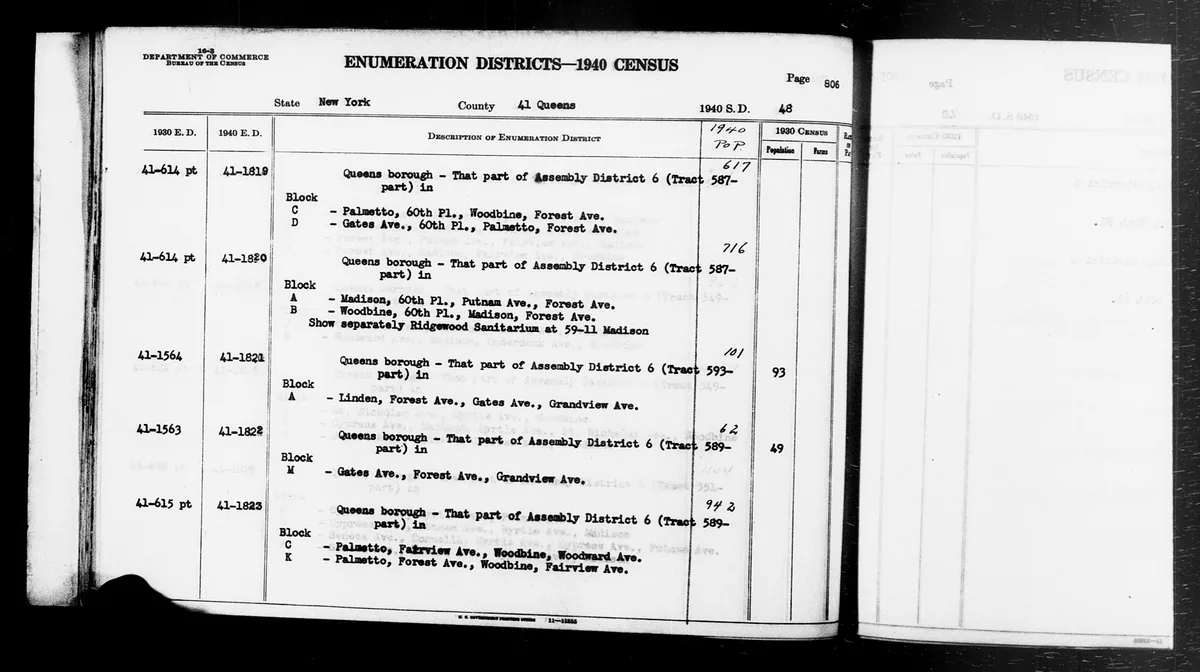
The census is not just a nose count. Federal analysts have tied census-guided distribution to more than $1.5 trillion a year across hundreds of programs, according to research from the U.S. Census Bureau and the Brookings Institution. When your block is counted, money follows — for the school bus route, the Medicaid clinic, the pothole crew.
Why does a headcount carry a price tag?
Most federal money is not handed out by whim. It is parceled out by formula, and those formulas are built on population counts, income estimates and housing data that trace back to the decennial census and the ongoing American Community Survey. A city that looks bigger on paper qualifies for a bigger slice. A county that looks smaller quietly drops a rung.
Researchers at the George Washington Institute of Public Policy examined this pipeline in a long-running study of federal assistance programs. They found that even a small undercount in the 2020 cycle shifted measurable dollars away from states with harder-to-count populations — renters, young children, rural households and recent immigrants among them.
The stakes are durable, too. A count taken in a single season steers funding decisions for the following ten years, because most formulas are not recalculated between censuses. There is no mid-decade appeals process for a household that never got counted.
Which programs actually depend on the count?
More than 300 federal programs use census-derived data in some form. The largest ones touch daily life in plain ways:
- Medicaid, the joint federal-state health program, whose matching formulas lean on per-capita income and population figures.
- The Highway Planning and Construction program, which distributes money partly by population and highway lane miles.
- Title I education grants, aimed at schools serving low-income students and built on census poverty estimates.
- SNAP, whose administrative allocations reference population and income data.
- Section 8 housing vouchers and community development block grants, both shaped by local counts of need.
Each program has its own formula, but nearly all of them begin with the same raw input: how many people live where, and what their circumstances look like.
What does an undercount look like on the ground?
It looks like a crowded classroom and an empty grant application. The Census Bureau's own post-enumeration survey of the 2020 count found the national total was close to accurate overall, but with a measurable undercount of Black, Hispanic and Native American residents, and of children under five — while the white population was slightly overcounted.
Those errors do not cancel out in a friendly way. They concentrate. A neighborhood that misses a few hundred residents can slip below a threshold that would have qualified it for a targeted grant, while a well-counted suburb two towns over clears the same bar. Multiply that across a decade and the gap compounds.
Local officials know this, which is why complete count committees — volunteers, librarians, church groups — knock on doors in the months before a census. They are not promoting a political project. They are chasing a number that converts directly into services.
Does the count change political power too?
It does. Census results apportion seats in the U.S. House of Representatives and anchor the redistricting maps that follow. The 2020 cycle shifted seven House seats among the states, with Texas gaining two and states including California, Illinois and Michigan each losing one.
So the same number that funds a rural health clinic also decides how many voices a state sends to write the laws. That is why a census with no names attached to its published tables is still one of the most contested civic exercises in American life.
What happens between censuses?
Between the big counts, the Census Bureau runs the American Community Survey — a continuous poll sent to a rotating sample of households every month. It feeds the annual updates that keep some formulas honest, tracking income, commuting, housing age and language spoken at home.
But the ACS is an estimate built on samples, and its margins of error are widest exactly where undercounts are worst: small towns, tribal lands and dense urban blocks. The 2020 census also introduced new privacy protections that added statistical noise to small-area data, which local planners have had to learn to work around.
The practical takeaway is simple. The households least likely to answer a government form are the ones most dependent on the programs the form funds.
How do towns fight back against a bad count?
With preparation, mostly. Before the 2020 cycle, state and local governments formed complete count committees, hired outreach coordinators and mapped their hardest-to-count blocks using a Census Bureau tool that scored every tract on response likelihood. The goal was to spend scarce outreach money where the risk of being missed ran highest — student neighborhoods, immigrant enclaves, manufactured-home parks, remote valley roads.
Trusted messengers mattered more than official mailings. A form from a federal agency raises different reactions than a knock from a neighbor, a pastor or a tribal elder, and outreach built on local trust consistently outperformed generic campaigns. Where states invested early — California's outreach budget was among the largest in the nation — return rates held steadier through the pandemic-disrupted 2020 count than in states that waited.
The lesson carried forward is that a census is not an event that happens to a town. It is a project a town does, and the towns that treat it that way bank the results for ten years.
How can a regular person matter here?
By answering, and by helping neighbors answer. Every residence that goes uncounted is treated, for a decade, as if it needs nothing — no school seat, no clinic visit, no bus line.
Local libraries, community colleges and county extension offices often run the most trusted outreach, because they are staffed by people the neighborhood already knows. When the next count approaches, those are the desks where a volunteer hour converts into real dollars down the road.
The census is the rare civic ritual where participation is purely additive. No argument, no candidate, no side. Just a household saying it exists, and a decade of quiet arithmetic doing the rest.