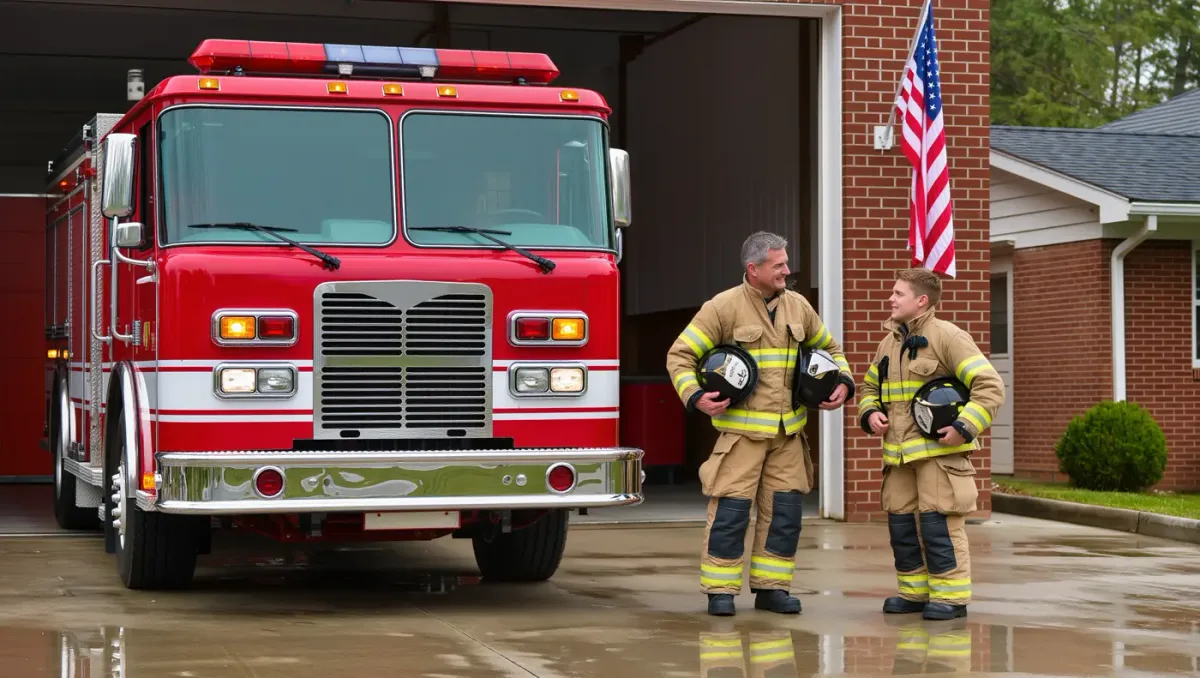
Most of the American fire service is unpaid. Industry associations including the National Volunteer Fire Council estimate that roughly two-thirds of U.S. firefighters are volunteers, staffing departments that protect a large share of the nation's land area and its smaller towns. Those rosters have been shrinking for decades, and the people holding the pagers know exactly why.
How big is the decline?
Numbers vary by source, but the direction does not. The National Fire Protection Association's surveys have tracked a long fall in volunteer firefighter numbers since the mid-1980s, when the total was well over half a million, toward figures tens of thousands lower in recent counts — even as call volumes have risen. Call volume matters, because medical emergencies, not fires, now make up the majority of runs for many departments, and every run needs someone to answer it.
A department that once turned out thirty responders may now turn out ten, or fewer. Chiefs describe relying on mutual-aid agreements — neighboring departments covering each other's calls — not as a backup but as routine practice.
Where did the volunteers go?
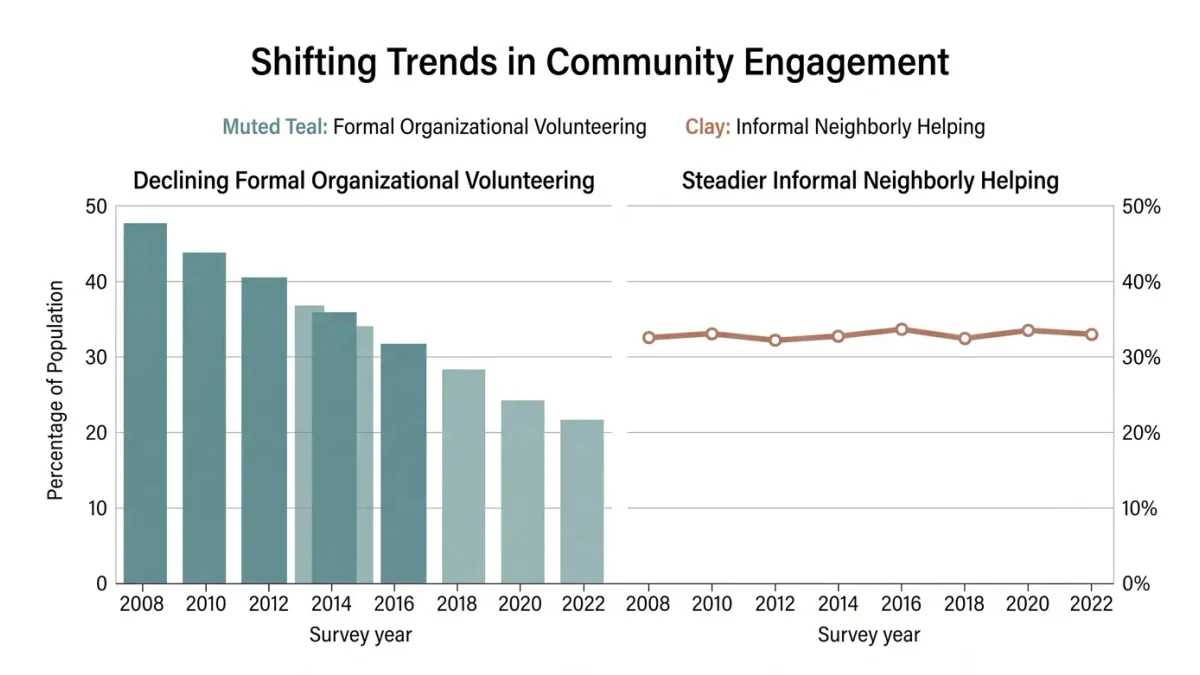
Not anywhere, exactly. The same people are still in town; the arrangement stopped fitting their lives.
Work moved. Volunteer firefighting was built on an economy of local jobs — farms, mills, main-street businesses — where a man (and it was mostly men, then) could leave work for a fire and come back. Longer commutes, service jobs in the next county and gig schedules with no flexibility broke that bargain.
Training requirements grew. Modern firefighting demands real certification hours each year, and rightly so — equipment and hazmat awareness are more complex. But a recruit facing a hundred-plus hours of initial training, on evenings, unpaid, is making a serious donation of time before ever seeing a fire.
Requirements of life grew too. Two-income households, children's activities, aging parents — the same time squeeze that has thinned Rotary clubs and church auxiliaries hit firehouses hardest, because the firehouse asks for nights, weekends and emergencies.
Recruiting pools narrowed. Departments in towns losing population draw from fewer residents by definition, and departments in fast-growing exurbs face the opposite irony: thousands of new neighbors, none of whom know the department exists or feel rooted enough to join.
What does a thin roster cost a town?
Response time, first. If the first engine waits for a crew, the fire does not wait. Insurance grading services consider staffing and response when rating a community's fire protection, and a worse rating can raise homeowners' premiums across a district.
Then there is cost. Replacing volunteers with career staffing is expensive — salaries, benefits, pensions — and many small towns cannot raise the revenue. The volunteer model is, in effect, an enormous annual in-kind subsidy from a few hundred thousand people to their neighbors. When it erodes, the bill arrives at the property tax line.
The toll is not only staffing. Long-serving volunteers describe the accumulation of calls witnessed — structure fires, fatal crashes — with little structured support for what they carry home. Departments that add peer-support training and critical-incident debriefs report better retention, a reminder that keeping people is partly about caring for them, not just recruiting them.
What are departments doing about it?
Adapting, mostly, with the creativity of institutions that cannot buy their way out:
- Length-of-service award programs, small retirement-style stipends for long-serving volunteers, now common where state law and funding allow.
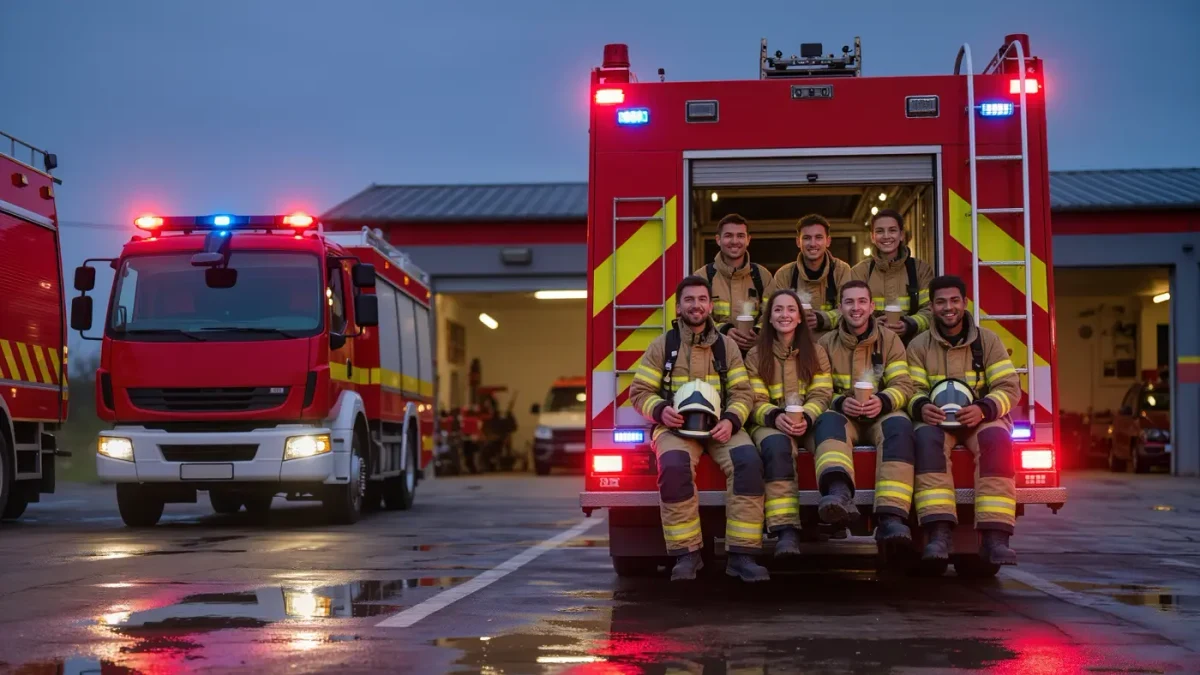
- Recruitment of women and newer residents, with departments reporting some of their best growth among populations the old culture overlooked.
- High school cadet programs that train teenagers and feed them into the adult ranks.
- Combined paid-volunteer staffing, a handful of career firefighters anchoring daytime coverage with volunteers augmenting nights and big incidents.
- State recruitment grants and marketing campaigns, including national programs run with the Federal Emergency Management Agency's support.
Does it work?
Locally, sometimes — a motivated chief with a cadet program and a stipend budget can stabilize a roster. Nationally, the trend line has been stubborn. The National Volunteer Fire Council and allied groups continue to press for expanded federal grant support and state incentives, noting that the underlying economics — more calls, more training, less available time — have not reversed.
Is anything changing structurally?
Slowly. The federal government has funded volunteer recruitment and retention grants through FEMA and the National Volunteer Fire Council's partner programs, and a growing number of states now fund length-of-service awards or tuition incentives for active volunteers — New York's incentive program among the longest-running, offering local property tax breaks and, in some versions, state tuition assistance for service.
Insurance-based ideas circulate too, since every resident's premium rests partly on the department's rating. Some towns have added modest local tax abatements for active members, an acknowledgment that a volunteer's donated hours lower everyone's bill. None of it has yet reversed the national curve, but the policy toolbox is fuller than it was a decade ago, and departments that combine several tools report steadier rosters than those relying on goodwill alone.
What can a town do?
If a community wants to keep its protection, the honest answers are unglamorous. Support the stipend program at the budget meeting. Let employees leave work for calls, if the town's employers can. Show up for the department's pancake breakfast, because that is where the next recruit's family first meets the crew.
And understand what is being asked. A volunteer firefighter donates not an evening but a standing promise — to leave dinner, sleep and work whenever the pager sounds, for neighbors who will rarely know their name. The wonder is not that the ranks are thinning. The wonder is that anyone still signs.