The sociologist Ray Oldenburg gave the idea its name in his 1989 book The Great Good Place: third places — the cafés, barbershops, taverns and piazzas that are neither home nor work, where people gather without a ticket or a purpose. In most American communities, the institution that now plays that role most faithfully is the public library, one of the few indoor public spaces where nobody is expected to spend money.
What makes a place a third place?
Oldenburg's criteria were specific. A third place is neutral ground — you can leave without explanation. It levels rank, so a retiree and a teenager occupy the same standing. It is conversation-centered rather than spectacle-centered, psychologically comfortable, open during long hours, and populated by regulars who set a welcoming tone.
Run the checklist against modern American geography and the survivors are few. Malls declined, and their successors charge admission to walk in spirit. Cafés and fast-food outlets have tightened loitering norms; barbershops and churches remain but serve narrower circles. The library, by contrast, meets every criterion by design, and does so for anyone with a library card — or, for that matter, without one.
Who is actually in the building?
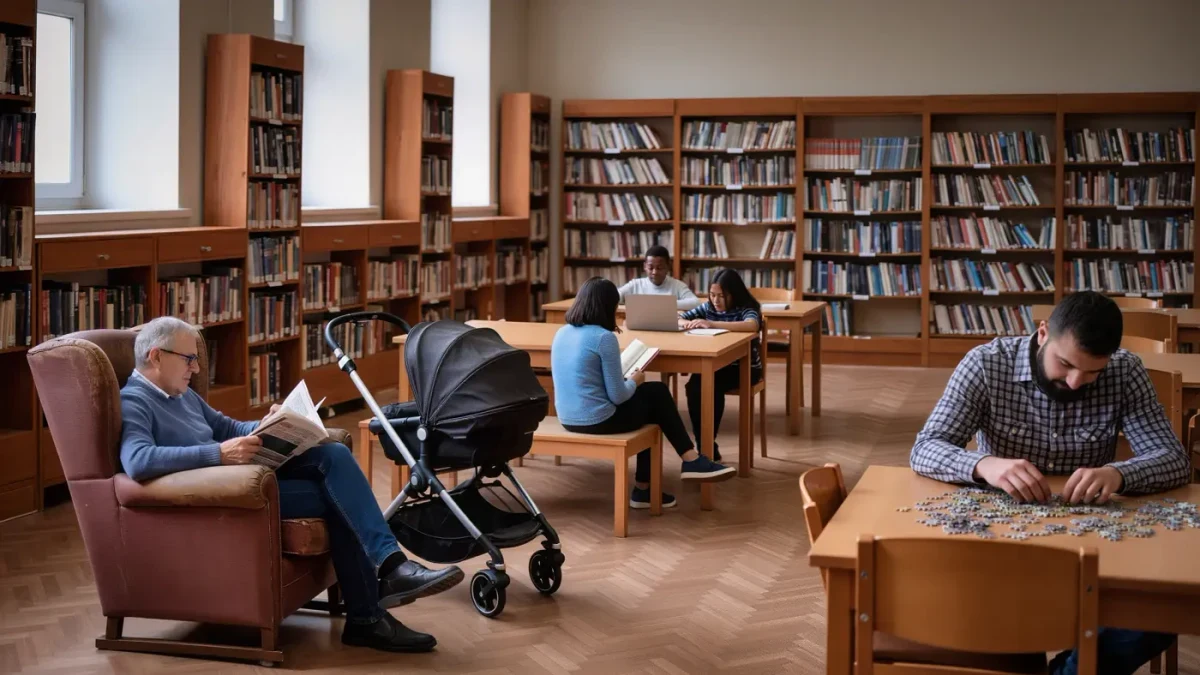
More kinds of people than any stereotype suggests. A typical weekday at a central branch mixes parents at story time, remote workers at tables, teenagers after school, job seekers printing résumés, unhoused people resting in climate safety, new residents practicing English, and older patrons reading newspapers that have grown scarce elsewhere.
Librarians describe the role plainly: they have become the default front desk for needs other institutions no longer staff — social services, digital help, sometimes basic first response in mental health crises. Several large systems have responded by hiring social workers in-house, an acknowledgment that the building functions as social infrastructure whether or not it is funded as such.
What does the library offer that coffee shops don't?
Free is the headline, but the deeper answer is freedom from transaction. No minimum purchase, no time limit on a chair, no expectation of productivity. That combination has grown rare enough to be almost radical. In an economy that converts every idle minute into a billable one, a room where a person may simply exist, among others, is doing quiet cultural work.
The programming matters too. Lecture series, knitting circles, repair cafés, seed libraries, tool lending, English conversation groups, teen councils — each one manufactures the repeated, low-stakes contact out which community is actually built. Sociologists who study civic life note that such repeated contact across social lines is precisely what has been declining in American life, and precisely what a branch library produces on a Tuesday afternoon.
Is the third-place role new?
The institution is old; the framing is newer. Andrew Carnegie's grants built nearly seventeen hundred American library buildings in the early twentieth century as self-improvement engines for working people. Over the decades, as other communal institutions thinned, libraries absorbed function after function — literacy programs in the 1980s, internet access in the 1990s, job-search help after the 2008 recession, emergency coordination during the pandemic, when branches served as cooling centers, distribution points and remote-learning havens.
Each addition stuck. The library's portfolio grew not by ambition but by adjacency: whatever people needed and could not find elsewhere eventually walked through its doors.
What pressures does the role bring?
Being everything to everyone is expensive and sometimes tense. Library workers report rising behavioral incidents as the buildings absorb needs — addiction, housing insecurity, untreated mental illness — that properly belong to better-funded systems. Budget fights recur in city councils, because the service is quiet and its beneficiaries rarely rally loudly.
There is also a design tension: renovated branches are often praised as vibrant community living rooms, but regulars seeking silence lose ground when every surface hosts a program. Good library design negotiates between the reading room and the town square, and the best renovations zone the building for both.
How are libraries funded, and why does it matter here?
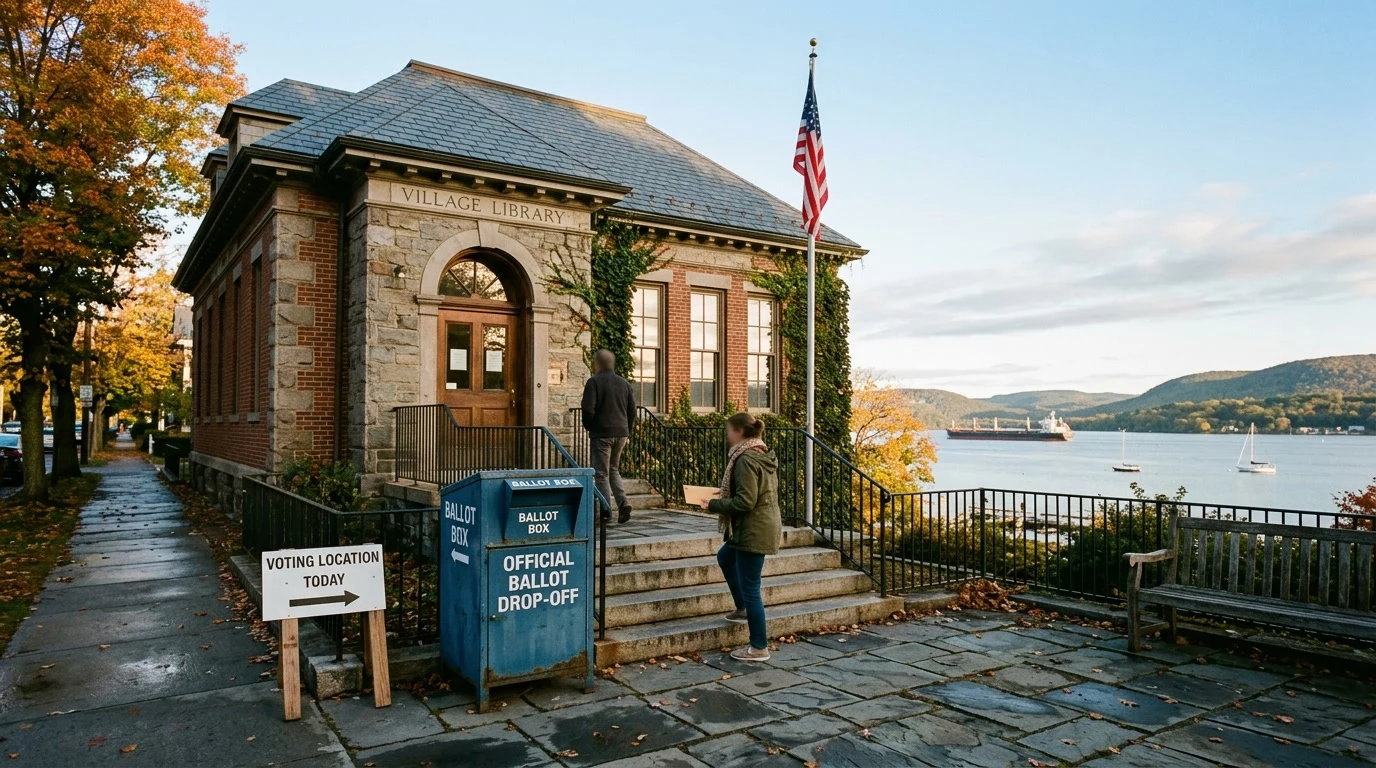
Most public libraries are city or county funded, with state aid and federal grants through the Institute of Museum and Library Services supplementing local appropriations. That local base makes the institution unusually responsive to its community — and unusually exposed to it. A library's fortunes rise and fall with municipal budget cycles, which is why bond issues for branches and fights over operating lines have become recurring local news.
The third-place role is precisely what tight budgets put at risk. Books and databases are visible, countable deliverables; the value of a room where teenagers and retirees coexist is invisible on a spreadsheet. Communities that fund only the countable part get a thinner institution — open fewer hours, staffed fewer days — and the third place quietly stops functioning long before the doors close.
Why should anyone without a library card care?
Because third places are civic infrastructure, and their disappearance has measurable company: loneliness, distrust across social lines, declining membership in everything from unions to bowling leagues — the trends Robert Putnam charted in Bowling Alone a quarter century ago. The library is the broadest remaining counterexample, the last institution where a community's full range of ages, incomes and backgrounds shares one roof by choice.
The practical response is ordinary. Get the card, sure — but also attend the council meeting when the budget line appears, and notice, the next time you pass the branch, how many kinds of belonging are happening behind the glass. Oldenburg argued that great good places are made by the regulars who keep them alive. That job is open, and it does not require an application.